

The Middle East and North Africa entered the final quarter of 2025 with a mixed economic picture. Growth across the region improved modestly, with the World Bank projecting GDP expansion of 2.8 per cent for the year, up from 2.3 per cent in 2024. The IMF offered a slightly more optimistic assessment, forecasting 3.2 per cent growth across the broader MENAAP grouping. Yet these headline figures concealed a widening gap between countries with the resources to invest in structural change and those trapped in cycles of debt, conflict and institutional weakness.
The divergence between Gulf economies and the rest of the region has become a defining feature of MENA’s economic landscape. Gulf Cooperation Council states posted stronger growth than anticipated, driven by the gradual rollback of OPEC+ production cuts and robust expansion in non-oil sectors. Saudi Arabia continued to channel investment into tourism, technology and industrial development under its Vision 2030 programme. The UAE maintained momentum through construction, logistics and financial services. These economies benefited from large sovereign wealth funds, relatively young populations and the political capacity to direct capital toward long-term priorities.
Debt, Inflation and the Limits of Reform
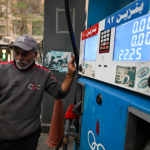
Outside the Gulf, the picture was considerably more fragile. The World Bank estimated that MENA’s average debt-to-GDP ratio had climbed to approximately 60 per cent, limiting governments’ ability to respond to economic shocks or fund social programmes. For oil-importing states in particular, the combination of high debt, elevated food and energy costs, and limited fiscal space created persistent pressure on household living standards.
Inflation remained a significant concern across much of the region. While the IMF projected MENAAP inflation to ease gradually, reaching around 11 per cent by the end of the decade, price pressures in 2025 continued to strain consumers in Egypt, Tunisia, Yemen and other vulnerable economies. Rising food costs, driven partly by disrupted supply chains and climate-related agricultural losses, compounded the difficulties facing lower-income populations.
Egypt, the region’s most populous country, projected growth of approximately 3.8 per cent for the fiscal year, supported by infrastructure investment and stabilising exports. Morocco posted solid expansion of around 3.4 per cent on the back of industrial diversification and improved agricultural output. Both countries demonstrated that reform could yield results, but each faced constraints that limited the pace of change. Egypt’s subsidy regime and foreign currency pressures persisted, while Morocco’s growth remained vulnerable to drought and external demand.
Conflict as an Economic Multiplier
Conflict continued to function as the single most destructive force acting on MENA economies. The World Bank estimated that economies directly affected by conflict, including Sudan, Yemen, Lebanon and the Palestinian territories, suffered an average GDP loss of roughly 15 per cent in 2024. These losses rippled outward through displaced populations, disrupted trade routes and diminished investor confidence.
Sudan’s civil war devastated agricultural production and severed internal trade networks, contributing to one of the world’s most severe food security emergencies. Yemen’s economy contracted for the third consecutive year, with the Houthi blockade on oil exports choking government revenues. In Gaza, destruction of physical infrastructure and the near-total collapse of economic activity created conditions that will take decades to reverse. Lebanon, while experiencing a fragile stabilisation after years of financial crisis, remained constrained by institutional paralysis and the lingering effects of the 2020 port explosion and banking sector collapse.
The IMF noted that over 160 million people across MENA lived in conflict-affected economies, and that in 2024 alone, 36 million were in close proximity to active conflict events. Post-conflict recovery in the region has historically been slower and more fragile than in other parts of the world, with only about one-third of recovery episodes achieving a return to pre-conflict economic trajectories within five years.
Trade Uncertainty and External Pressures
Global trade dynamics added another layer of uncertainty in 2025. Changes to United States tariff policy earlier in the year raised concerns about indirect effects on MENA economies, particularly through weaker global demand, tighter financial conditions and reduced remittance flows. While direct trade exposure to the US remained limited for most MENA states, the second-order consequences of slower global growth had the potential to erode the modest gains recorded in the region.
The Private Sector Gap
The World Bank’s April 2025 economic update focused specifically on the weakness of MENA’s private sector as a constraint on growth. The report found that labour productivity had been declining across many countries, that few firms invested meaningfully in innovation, and that a persistent divide separated a small formal sector from a large informal economy. Female participation in the workforce remained the lowest of any region globally, with only one in five working-age women economically active.
For policymakers across the region, the message from 2025 was consistent. Growth remained possible, but it required deeper institutional reform, greater private sector dynamism and sustained investment in human capital. Without these, the region’s demographic pressures risked becoming a source of instability rather than a driver of prosperity.



اترك تعليقاً