
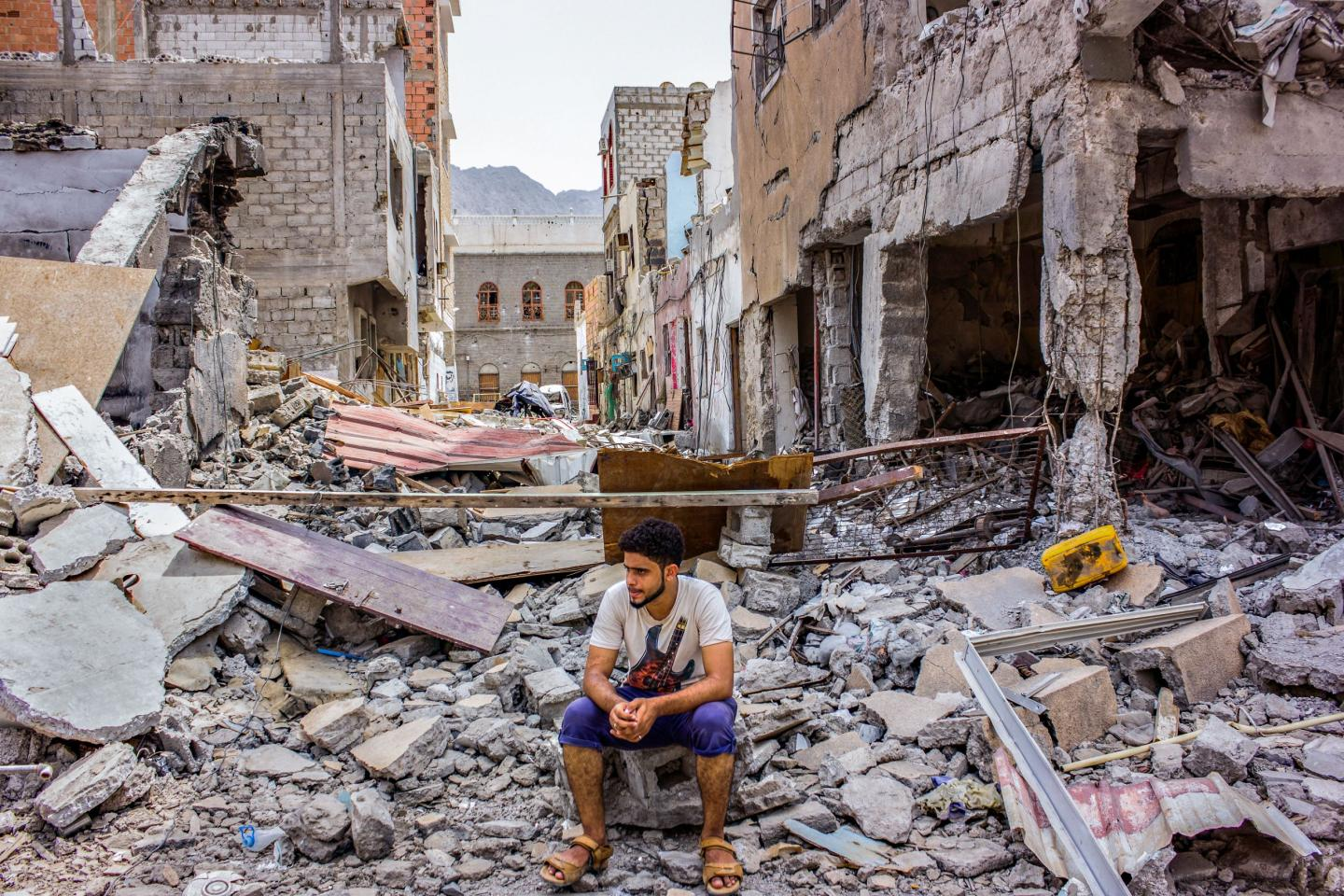
By November 2025, Yemen’s economy had contracted for the third consecutive year, with the World Bank projecting a GDP decline of 1.5 per cent. Real GDP per capita had fallen by 58 per cent since the start of the civil war in 2015, a collapse that placed Yemen among the most severe cases of conflict-driven economic destruction in modern history. More than 80 per cent of the population lived below the poverty line, and an estimated 17 million people faced acute food insecurity.
The World Bank’s Fall 2025 Yemen Economic Monitor, published in November, described a country caught between fragmentation and fragility. The continued blockade on oil exports by Houthi forces, rising inflation, declining international aid and deepening institutional division had compounded to produce conditions in which basic economic functions were breaking down across much of the country.
Currency Collapse and Dual Economies
The most visible indicator of Yemen’s economic distress in 2025 was the collapse of the Yemeni rial. In areas controlled by the Internationally Recognised Government, the currency depreciated from approximately 1,540 rial per US dollar at the start of 2024 to an all-time low of 2,905 per dollar by July 2025. Inflation in IRG-controlled areas exceeded 35 per cent year-on-year by mid-2025, with the price of a basic food basket rising 26 per cent in the space of a single year.
The IRG’s fiscal position had deteriorated sharply. Government revenues, excluding grants, had fallen to just 2.5 per cent of GDP in 2024, driven primarily by the Houthi blockade on oil exports that had been in place since late 2022. Oil revenues had previously accounted for more than half of government income. Without them, the IRG struggled to fund basic services, pay civil servants or maintain essential infrastructure.
In Houthi-controlled areas, the economic picture was different but equally severe. The rial remained more stable on the Sana’a market, but deflation and persistent liquidity shortages restricted access to imports and essential goods. Airstrikes on key ports further constrained commercial activity. The dual-currency environment that had emerged from competing monetary policies in Aden and Sana’a continued to divide the country’s financial system, complicating trade, humanitarian operations and daily commerce.
Financial Sector Under Strain
Yemen’s banking sector faced growing pressure throughout 2025. Following the United States’ re-designation of the Houthis as a Foreign Terrorist Organisation in early 2025, major Yemeni banks relocated their headquarters from Sana’a to Aden in order to preserve correspondent banking relationships with international financial institutions. This move protected the banks’ ability to process cross-border transactions but deepened the institutional split between the two zones of control.
The Central Bank of Yemen in Aden introduced a series of emergency measures in response to the currency crisis, including mandating that exchange companies record customer data, requiring surplus foreign currency to be sold to licensed banks and revoking licences from suspected currency manipulators. In July, the government established a new committee to regulate imports and channel foreign exchange into the formal banking sector. These measures contributed to a stabilisation and partial recovery of the rial later in the year.
Humanitarian Funding in Decline
International humanitarian assistance, long a critical lifeline for millions of Yemenis, continued to decline in 2025. By September, only 19 per cent of the $2.5 billion required under the United Nations Humanitarian Response Plan for Yemen had been funded, the lowest level in over a decade. With donor budgets under pressure globally and competing crises in other regions absorbing available resources, the shortfall showed little prospect of being closed before the end of the year.
The consequences of declining aid were visible across the country. More than 60 per cent of households in both IRG and Houthi-controlled areas reported inadequate food consumption, with many resorting to negative coping mechanisms including begging and the sale of productive assets. Women and children bore a disproportionate share of the burden.
Prospects and the Cost of Continued Division
The World Bank outlined three potential economic trajectories for Yemen: continuation of the status quo, escalation of conflict, or a path toward lasting peace. Under the peace scenario, Yemen’s economy could grow by an average of five per cent annually over the next fifteen years, supported by renewed investment, stronger institutions and targeted reconstruction. Under the status quo, contraction and fragmentation would persist, with the country’s economic and institutional foundations continuing to erode.
For now, the prospects for a negotiated settlement remained uncertain. The frontlines had been largely frozen since the 2022 ceasefire, but neither side had shown willingness to make the concessions required for a comprehensive political agreement. Regional dynamics, including the broader geopolitical competition in the Red Sea, continued to influence the pace and direction of any potential peace process.
Yemen’s experience underscored how quickly economic systems could collapse under the weight of prolonged conflict and institutional division. Recovery, whenever it begins, will require sustained international support, coordinated institution-building and a political settlement that reunifies economic governance.






Leave a Reply