
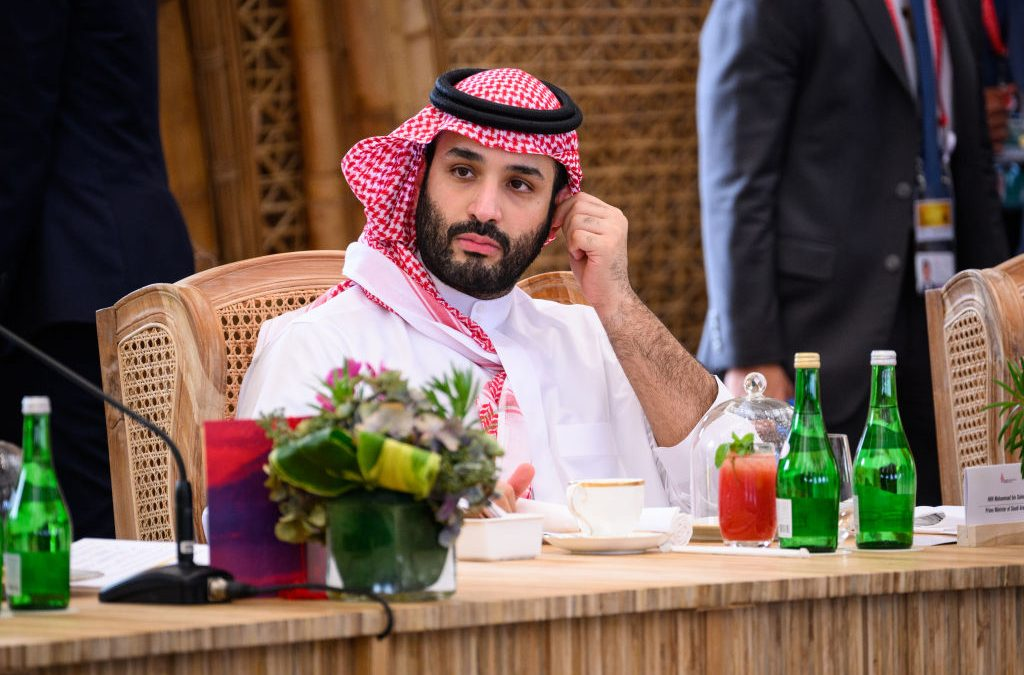
Mohammed bin Salman (MBS) rose to power as crown prince and de facto ruler since consolidating power in 2017, MBS didn’t just inherent The Public Investment Fund (PIF) he turned into the perfect imperialist machine for soft power projection.
- The Public Investment Fund (PIF), controlled by Crown Prince Mohammed bin Salman, has facilitated and benefited from human rights abuses. has facilitated and benefited from human rights abuses.
- The crown prince has used the fund’s economic power to commit serious human rights violations and investments in foreign sporting events to whitewash the reputational harm.
The crown prince has consolidated unprecedented state economic power under his sole decision-making through the PIF, with few, if any, constraints on how he deploys his nation’s wealth, research has found.
He effectively has singular, unfettered control of one of the world’s largest sovereign wealth funds in the world. Which has potentially been utilized to cover up past Saudi scandals like the crown prince ordering the dismembering of a journalist or when the princes of the kingdom were locked up in the Ritz until they turned over their businesses to the MbS or the PIF. There is an immense risk in the crown prince’s control of over nearly a trillion dollars in Saudi sovereign wealth.
“Saudi Crown Prince Mohammed bin Salman has unchecked control over the country’s nearly trillion dollar Public Investment Fund,” said Joey Shea, Saudi Arabia researcher at Human Rights Watch. “The crown prince has used the Saudi sovereign wealth fund’s economic power to commit serious human rights violations and whitewash the reputational harm from these abuses.”
For decades, Human Rights Watch has documented how a centrally controlled revenue stream, such as oil, can exacerbate a ruler’s worst abuses and misrule by providing the financial resources for enrichment without accountability and transparency. Poor economic decision-making, mismanagement, corruption and human rights abuses thrive. There is no better example than Saudi Arabia’s Public Investment Fund and Mohammed bin Salman.
Mohammed bin Salman has used the fund to pursue his interests, with few, if any, guardrails as the chairman of the PIF’s board of directors; and he chairs the body that oversees the board, the Council on Economic and Development Affairs. He is also the country’s prime minister, which grants him the authority to appoint all board members with no oversight. His is the only name needed on the PIF’s organizational chart.
The wholly-PIF-owned Jeddah Central Development Company, which is carrying out the Jeddah Central Project, forcibly evicted large numbers of middle and lower-class Saudis, foreigners, and migrant workers from their homes in Jeddah’s previously vibrant working-class neighborhoods to transform the area into a luxury shopping and tourism district.
Saudi authorities forcibly evicted members of the Huwaitat tribe, who have for centuries inhabited the Tabuk province, in the planned NEOM area, arrested those who protested their evictions, and killed one protesting resident. Two residents received sentences of 50 years in prison, and three received death sentences for resisting the forced evictions.
The crown prince’s authority over the PIF is mirrored by a broader consolidation of his power over the country’s political and security institutions.
Major PIF investments have involved unilateral decision-making by the crown prince, despite protests from the board of directors and professional advisers. The crown prince has circumvented governance procedures and done as he pleases.
Some of his decisions are questionable. In early 2020, the crown prince wanted the PIF to buy specific stocks as the markets plummeted during the onset of the global pandemic. In an interview, Yasir al-Rumayyan, the PIF’s governor, said that the board of directors voted against the move because it was seen as too risky but that the crown prince “took the matter to the King” who issued a decree, allowing the crown prince to bypass the PIF’s governance framework.
Many have also documented the human rights abuses directly tied to the PIF, raising serious concerns for investors with any possible links to abuses in Saudi Arabia. Documents show that in 2017, one of Mohammed bin Salman’s advisers ordered al-Rumayyan, then the Fund’s supervisor, to transfer 20 companies that were captured as part of the “anti-corruption campaign” directly into the Fund. There is a risk that these companies were seized from their owners without due process.
The documents also indicated that one of the companies transferred to the PIF was Sky Prime Aviation, a charter jet company that owned the two planes used in 2018 by Saudi agents to travel to Istanbul, where they murdered Jamal Khashoggi, the Saudi journalist who was critical of the Saudi government.
Given that there are few if any domestic checks and balances on the crown price’s decision-making power over the PIF, money managers and executives need to make sure that they carry out their own extensive, thorough, and independent human rights due diligence and other protections before engaging in any business activities with the PIF. Ultimately, firms should refrain from doing business with the PIF if they conclude that serious adverse rights impacts are unavoidable.

Leave a Reply