
From Saudi Arabia’s founding in 1932 through the early twenty-first century, the country’s foreign policy was centered on its leading role in the Arab and Muslim worlds, as well as its domination of global energy markets, which accounted for 90 percent of its export revenue by 2000. Dealings with the Greater Horn of Africa largely consisted of religious outreach, where the kingdom built religious schools and mosques, awarded scholarships, free Haj pilgrimages, and even published literature promoting Salafism. The windfall from the post-1973 oil boom allowed Saudi Arabia to spread its influence and its particular interpretation of Islam, thereby countering other ideological movements such as Arab nationalism, Shia Islamism after the Iranian revolution in 1979, and even some more extreme interpretations of Sunni Islam in Sudan and Ethiopia — all with limited economic activity. Investments in the region were modest, despite the fact that it is home to 65 percent of the world’s uncultivated arable land, and even though 12–15 percent of global trade passes through the Red Sea. The absence of sustained engagement created a trust deficit, with African states viewing Saudi Arabia as a distant actor possessing only a limited understanding of local dynamics.
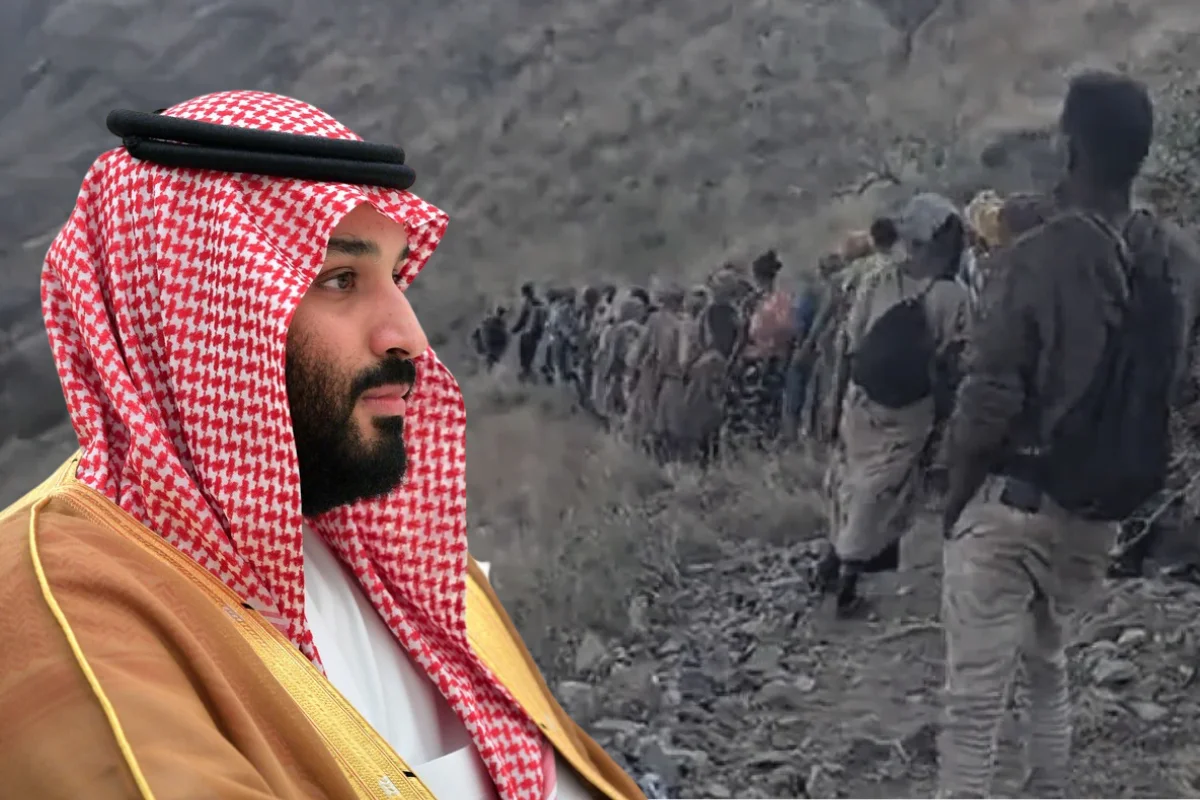
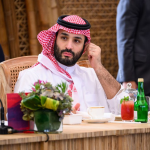
This changed with the launch of Vision 2030. The latter casts the Greater Horn of Africa as a critical frontier for addressing Saudi Arabia’s water scarcity and its dependency on oil to power its economy. Vision 2030 also seeks to address the kingdom’s 80 percent reliance on food imports. To tackle this issue, MbS decided to enhance domestic production and secure stable, sustainable food supplies by investing in agricultural technology and farmland in African countries. But Vision 2030 did not emerge from a vacuum. It emerged from a man, Crown Prince Mohammed bin Salman, also known as MbS, and understanding his ambitions is essential to understanding what Saudi Arabia is doing in the Horn of Africa today.
The KSA has invested billions of dollars in several African countries across sectors such as mining, oil, infrastructure, logistics and agriculture, agricultural land, renewable energy, mining and telecommunications, as well as extensive military cooperation agreements, making it a significant player in regional geopolitics and gaining control of significant portions of their national economies. These ventures are not solely driven by business interests but serve as strategic moves to extend its influence.
Saudi Arabia has exhibited features of sub-imperialism since the mid-twentieth century through direct military interventions and political, financial and religious activities that influence the region, while relying on the US for defense and aligning closely with its economy.
Sub-imperialism is characterised by actions that extend a nation’s political, economic and military influence over other nations or regions. The KSA’s regional strategy is widely recognised as being driven by ambitions of economic hegemony, political expansion and countering perceived threats from Islamic political movements and from Iran. An overlooked factor, however, is the regime’s survival instinct and its fear of popular, democratic or revolutionary movements. This aspect is often neglected owing to limited awareness of political activism and movements within the KSA and the broader Gulf region.
Studying the KSA’s sub-imperialist role in Africa is therefore critical to understanding its substantial influence in reshaping regional geopolitics and global capitalism. This analysis helps to shed light on pathways for resistance and justice movements to challenge these power structures effectively.
MbS and the Architecture of Neo-Imperial Ambition
When MbS consolidated power between 2015 and 2017, he did so with a velocity that left older Saudi elites, and foreign observers shocked. He arrested hundreds of businessmen and princes in the Ritz-Carlton purge of 2017, silenced and jailed dissenting clerics, and repositioned Saudi foreign policy as an instrument of his personal vision rather than a product of consensus among the royal family. What followed was beyond a domestic power grab — it was the foundation of an outward-facing imperial project, one that would use Saudi Arabia’s oil wealth, religious infrastructure, and strategic geography to extend Riyadh’s dominance. The Greater Horn of Africa became one of the primary theaters of this ambition.
MbS understood something that his predecessors had underestimated: the Horn of Africa is not a peripheral concern but a strategic corner piece. The Red Sea corridor, which runs between the Arabian Peninsula and the eastern coast of Africa, carries a significant share of global trade and sits at the intersection of rival great power interests. Iran’s expanding naval presence, Turkish military installations in Somalia, and persistent instability in Yemen had convinced MbS that the African side of the Red Sea must be brought within Saudi Arabia’s orbit — or risk being captured by its enemies. What began as soft religious power in the twentieth century was now being supercharged with petrodollar investment, security agreements, and the blunt instrument of aid conditionality.
Oil Money as a Tool of Indoctrination and Control
Saudi Arabia’s use of Islam as a foreign policy instrument predates MbS, but he has weaponized it with greater precision than any of his predecessors. For decades, oil revenues funded the global export of Wahhabism, the austere, literalist interpretation of Sunni Islam associated with the eighteenth-century cleric Muhammad ibn Abd al-Wahhab. Across the Greater Horn of Africa, Saudi petrodollars-built thousands of mosques, funded madrasas, sent preachers, and financed the translation and distribution of religious texts. The explicit goal was to replace locally rooted, often Sufi-influenced traditions of Islam with a uniform, Saudi-approved theological framework.
The consequences were profound and, in many cases, catastrophic. Wahhabism did not merely reshape religious practice. It created ideological pipelines that fed directly into jihadist movements. Al-Shabaab in Somalia, which has terrorized the country and its neighbors for nearly two decades, drew heavily from the well of Salafi-Wahhabi theology that Saudi funding helped deepen across the Somali religious landscape. While Riyadh has never claimed to sponsor Al-Shabaab, and indeed formally opposes it, the ideological infrastructure Saudi Arabia spent billions constructing created the conditions in which such movements flourish. This is the uncomfortable truth that the kingdom has never fully reckoned with: Saudi Arabia funded the theological ecosystem from which much of East African jihadism grew. The oil money that purchased religious loyalty also, inevitably, purchased radicalization.
Sudan: Land, Leverage, and the Logic of Extraction
Nowhere is MbS’s neo-colonial playbook more visible than in Sudan. After the fall of Omar al-Bashir in 2019, Saudi Arabia pledged billions in aid to Sudan’s transitional government. This was not generosity — it was a down payment on influence. Saudi sovereign wealth funds and private entities connected to Riyadh have quietly acquired vast tracts of fertile Nile Valley land, growing wheat and other staple crops for export back to Gulf populations. Sudan, with its desperate need for capital and its 65 percent share of the world’s uncultivated arable land, became what can only be described as an offshore breadbasket — a neo-colonial arrangement dressed in the language of investment.
When civil war erupted in Sudan in 2023, Saudi Arabia attempted to position itself as a neutral mediator through the Jeddah talks. But Riyadh’s deep financial entanglements with multiple Sudanese factions undermined any claim to neutrality. MbS had helped engineer a Sudan that was financially dependent on Gulf capital and strategically aligned with Saudi interests — and when that arrangement collapsed into war, Saudi Arabia found itself implicated in the very instability it claimed to oppose.
Somalia and Ethiopia: Religion, Ports, and Proxy Competition
In Somalia, Saudi Arabia’s influence operates through the twin levers of theology and commerce. Saudi-funded religious institutions have long oriented Somali Islam toward Wahhabi norms, creating networks of dependency that serve Riyadh’s broader strategic goal of countering Iranian influence and rival interpretations of political Islam. When Somalia’s government drifted toward Saudi alignment under President Hassan Sheikh Mohamud, investment in port infrastructure and security training followed — reward for ideological loyalty masquerading as development partnership.
Ethiopia, meanwhile, illustrates the limits of MbS’s leverage. The 2018 Ethiopia-Eritrea peace deal — brokered with significant Saudi financial incentives — was a genuine diplomatic achievement, one that gave Riyadh access to Eritrea’s Red Sea coastline and positioned both nations as receptive to Gulf investment. But when the Tigray War erupted in 2020, Saudi financial pressure proved unable to shape a conflict driven by forces beyond Riyadh’s control. Ethiopian leaders, skilled at playing multiple external actors against one another, took Saudi money without surrendering strategic autonomy. This is a recurring weakness in MbS’s imperial model: petrodollar leverage buys access but rarely commands genuine loyalty.
The Myth of MbS’s Moderate Islam
In recent years, MbS has cultivated an international image as a reformer and a champion of moderate Islam. He has allowed women to drive, opened cinemas, and spoken publicly about the need to return Saudi Arabia to a more tolerant religious culture. Western governments, eager to maintain access to Saudi oil and arms markets, have largely amplified this narrative.
But moderation, as practiced by MbS, is performative. The clerics who thrive in Saudi Arabia today are not independent scholars or voices of genuine theological pluralism — they are loyalists who have learnt that to thrive they must continue to further the legitimacy of the Saud family. The religious figures who have retained platforms, influence, and state support under MbS are precisely those who echo his political rhetoric, legitimize his consolidation of power, and endorse his foreign policy adventures. Senior clerics who questioned the Yemen war, or expressed reservations about Vision 2030’s social liberalization were jailed, silenced, or exiled. Salman al-Awda, one of the most prominent Islamic scholars in the world, has been imprisoned since 2017, reportedly facing the death penalty — not for extremism, but for failing to publicly endorse MbS’s policies.
The moderation MbS champions is not a theological opening. It is the final stage of an imperial project begun with oil money and mosque-building — the replacement of an independent religious establishment with a wholly compliant one. In the Greater Horn of Africa, as in Saudi Arabia itself, the kingdom’s religious influence has never been about genuine spiritual development. It has always been about control. Under MbS, that logic has simply been made more explicit, more ambitious, and more ruthless in its execution.


Leave a Reply