
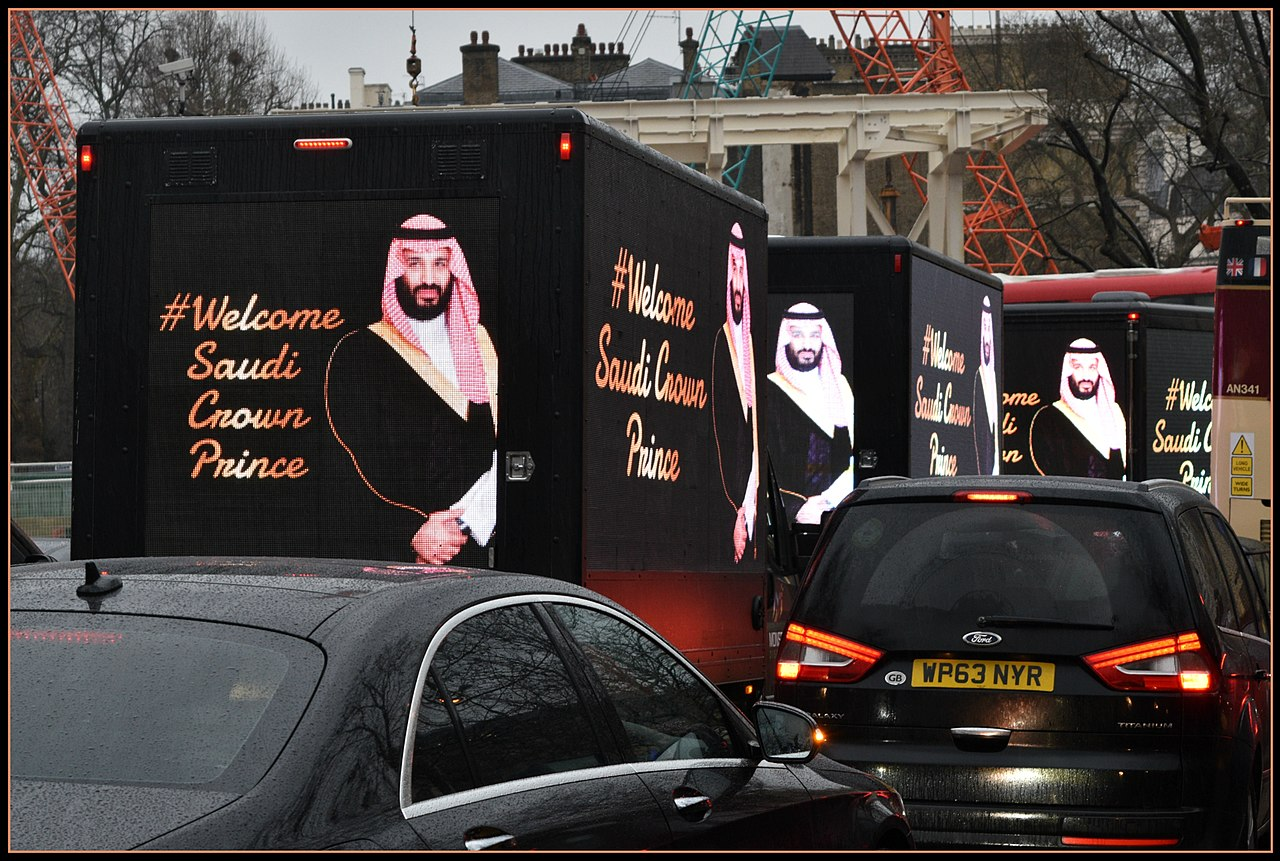
Colonialism and imperialism have never required an army to be effective. If you take a quick look at history’s most durable forms of control, the ones that outlast flags or occupation forces, they all work through a combination of culture, faith, and dependency. When a colonial power overtime can determine what a people believe, how they pray, who they look to for authority, and what they think, it no longer needs to have boots on the ground.
This is the model the Kingdom of Saudi Arabia (KSA) has been trying to intentionally emulate for decades. It is the deliberate, personal project of one man: Mohammed bin Salman, also known as MBS. As crown prince and de facto ruler since consolidating power in 2017, MBS didn’t just inherent an imperialist machine, he built it into what it is today, and turbocharged it turning it into something evn his father had never even dreamed of. Every mosque funded, every dissident jailed, every billion transferred to a foreign general is a decision that flows from his authority. The buck stops with him.
Between 1982 and 2005, Saudi Arabia spent an estimated 75 to 100 billion dollars exporting Wahhabism, which is a rigid, puritanical interpretation of Sunni Islam, that has also been linked to various Jihadi movements across the Muslim world. The infrastructure created by the Saudi’s export of Wahhabism has been staggering with over 1,500 mosques, 200 Islamic colleges, 210 Islamic centres, and 2,000 schools stretching from Europe through Africa and to Asia. Each institution carries the same ideological intention to displace local Islamic traditions, replace them with a Saudi-approved framework, and create a network of religious dependency anchored in Riyadh’s extremist interpretation. MBS inherited this machine and chose not to dismantle it. He chose to rebrand it and expand it.
This is neocolonialism in its most precise form. Classical European colonialism extracted land and labour. Saudi religious colonialism, operating under MBS’s direct authority, demands the right of communities to understand their own faith. Farah Pandith, a former US State Department official who visited nearly 100 countries studying this phenomenon, watched it unfold firsthand. In Kazakhstan, Timbuktu, Burma, the Balkans, Senegal, and Indonesia, she saw the same pattern repeat: locally rooted Islamic traditions displaced, and local leaders who knew what was happening but were too desperate for funding to say no. “They thought they could control the impact of Saudi ideology,” she wrote. “They were wrong.”
To understand the scale of the damage, you have to understand what Wahhabism replaced. Across the Muslim world, in Somalia, Sudan, Indonesia, and beyond, communities had developed rich, centuries-deep traditions of Islam shaped by Sufi scholarship: devotional, communal, and deeply local. These were not primitive or deviant forms of the faith. They were Islam as lived by actual people, rooted in place, adapted over generations. Mainstream Shia Islam stands as a powerful testament to what self-determined faith looks like when it has not been weaponised by a state. Its theological tradition carries a profound commitment to justice, the protection of the vulnerable, and holding power accountable. Values drawn directly from the example of Imam Hussain at Karbala, who refused to legitimise corrupt authority even at the cost of his own life. Shia communities around the world have maintained their independent religious scholarship that does not answer to a monarch or a sovereign wealth fund, and a living tradition of mourning and solidarity inseparable from calls for justice. This is precisely what MBS’s exported Wahhabism was designed to replace. When the Wahhabi infrastructure arrived in Somalia, shrines were desecrated, Imams were replaced, and Saudi-funded institutions created what researchers described as “ideological competition with local Islamist groups” paving the way for harder-line movements to follow. A 2013 report commissioned by the European Parliament identified Wahhabism as the primary source of global terrorism.
Understanding the destruction Wahhabism has caused makes MBS’s public posture all the more calculated and cynical. He has built a carefully managed international image as a reformer claiming international wins by allowing women to drive, opening cinemas, and speaking of returning Saudi Arabia to a more “moderate Islam.” Western governments, eager to protect oil contracts and arms deals, have largely amplified this story. But the clerics who thrive under MBS are not independent scholars or voices of genuine theological pluralism. They are loyalists he has personally selected and promoted. Salman al-Awda, one of the world’s most prominent Islamic scholars, has been imprisoned since 2017, not for extremism, but for failing to publicly endorse MBS’s political agenda. Meanwhile, MBS has elevated Saleh al-Fawzan a cleric who he describes as a personal father figure that has publicly declared Saudi Shia citizens to be non-Muslims and endorsed violence against dissenters.. These are not the choices of an institution on autopilot. They are the choices of a leader who decides, personally, which voices Muslims around the world are permitted to hear.
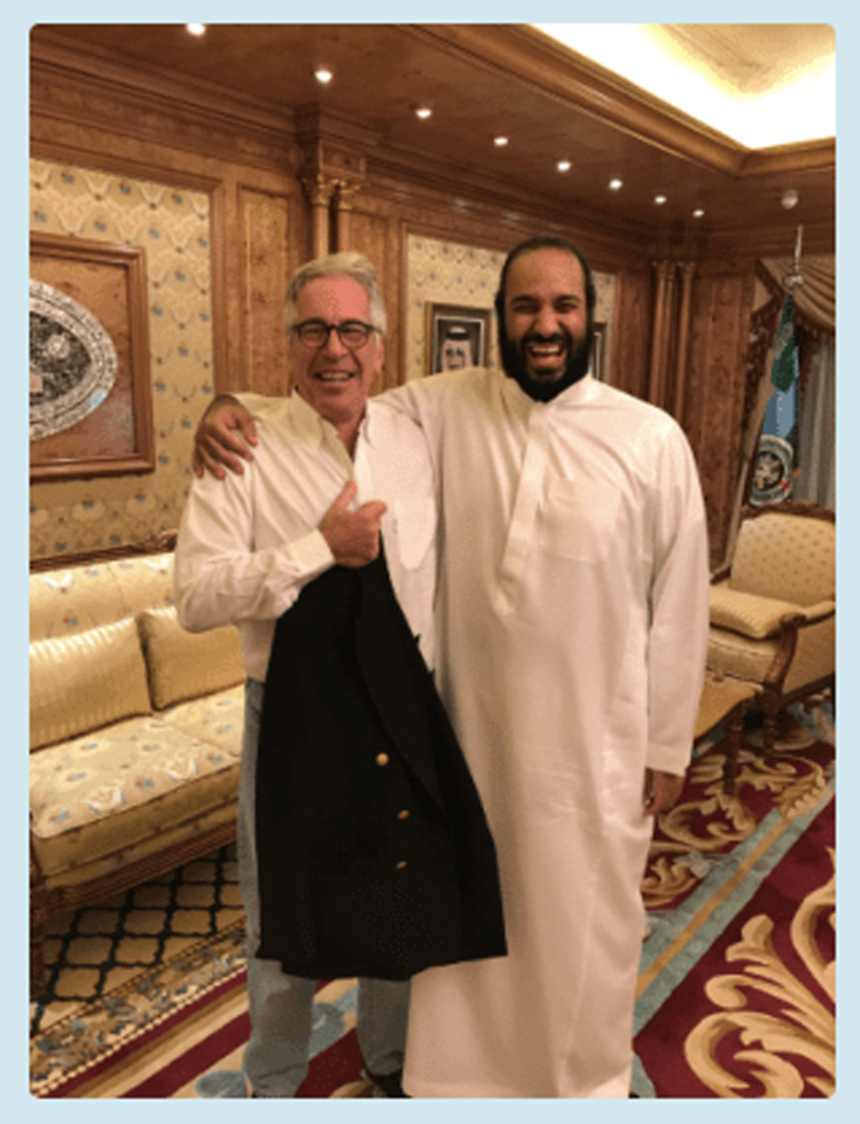
That same pattern of personal control and moral contradiction reaches its most disturbing expression in the documented relationship between MBS and Jeffrey Epstein. When federal agents searched Epstein’s Manhattan townhouse following his 2019 arrest, they found a framed portrait of MBS prominently displayed on the wall of the world’s most well-known paedophile’s and fixer/procurer. Epstein’s expired Austrian passport listed his home address as Saudi Arabia. In late 2016, Epstein flew alone from Paris to Riyadh, returning with a lavish personal gift from MBS, a royal set of tents typically reserved for the most well esteemed friends. When the Ritz-Carlton purge of 2017 upended the Saudi elite, Epstein messaged a journalist asking whether his “Saudi friend” had survived. The Epstein files released in early 2026 revealed a further detail: a Saudi Royal Court adviser visited Epstein’s townhouse on the very day MBS was appointed crown prince, and intelligence on MBS’s US travel schedule was being relayed through Epstein’s networks. Most strikingly, a piece of the Kiswa, the sacred cloth of the Kaaba touched by tens of millions of pilgrims, was shipped as a gift to Epstein’s Florida home in 2017, years after his federal sex conviction. The holiest material in Islam, sent to a child sex trafficker, by the man who presents himself as the guardian of Islam. The movement of an object that sacred does not happen without approval from someone at the very top of the Kingdom of Saudi Arabia. That person is and still is MBS.
Leave a Reply