
There is a contradiction at the heart of Saudi Arabia’s foreign policy that the kingdom has spent billions of dollars trying to obscure. Mohammed bin Salman presents himself to the West as the indispensable partner in the struggle against Iran, extremism, and destabilizing forces in the Middle East. But his regional conduct clearly shows the truth behind the facade. Time after time, Riyadh has very publicly condemned one system in public, then accommodates or works around the same system when doing so serves Saudi leverage.
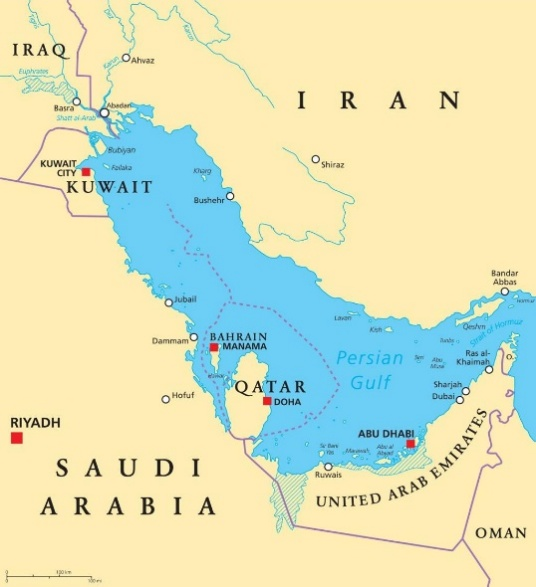
The clearest example is Qatar. The modern Saudi-Qatari story is inseparable from the 2017 Gulf rupture. On June 5, 2017, Saudi Arabia and three partners cut diplomatic ties with Qatar and imposed restrictions that affected travel, trade, and air routes. A detailed review of the episode by Columbia University Centre on Global Energy Policy describes the break as a coordinated policy attack led by Saudi Arabia, which was supported by the United Arab Emirates, Bahrain, and Egypt. Qatar was accused of supporting terrorism and destabilizing regional behaviour.
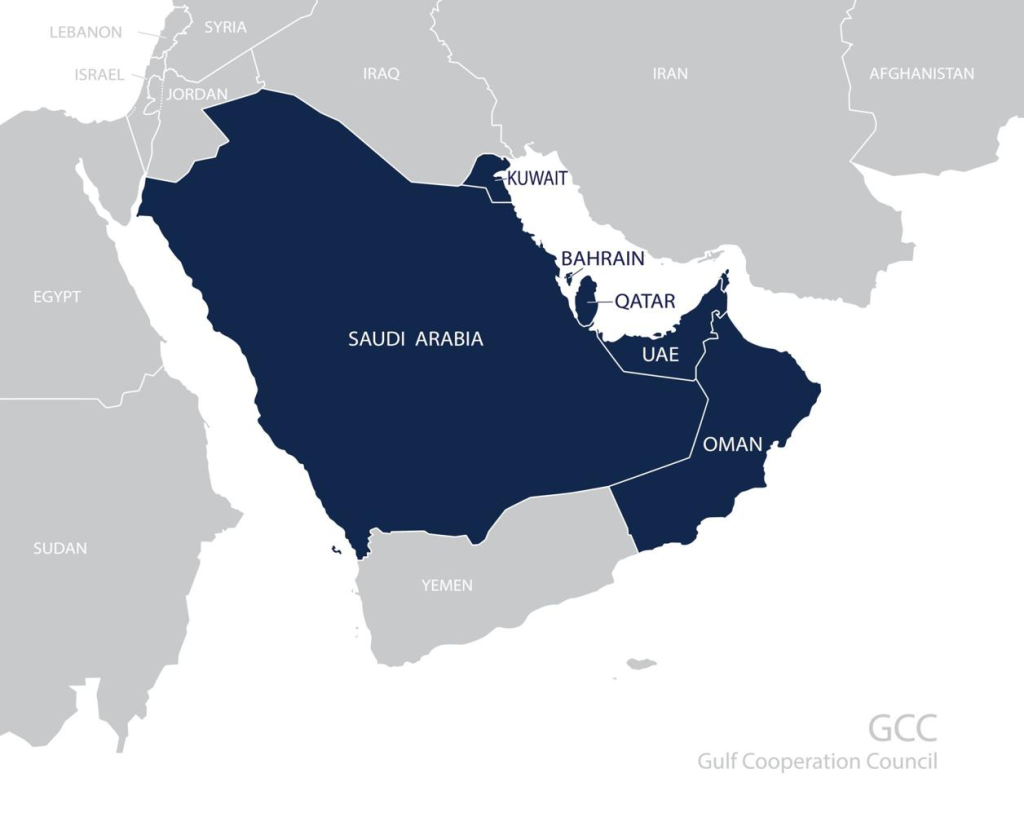
The Saudi-led bloc framed its dispute with Qatar partly around Qatar’s relationships with Turkey, Iran and accused Qatar of enabling Islamist actors. Reuters reported on June 22nd to 23rd, 2017, that the “13 demands” transmitted via Kuwaiti mediation included closing Al Jazeera, curbing ties with Iran, and shutting a Turkish military base in Qatar. Historically, Qatar, along with Iran, has aided and hosted groups that have undermined regional stability. That case was not invented out of thin air, as Qatar has hosted Hamas political leaders in Doha. Hamas has been designated a terrorist organization by the United States and the European Union because of its deliberate attacks on civilians, including suicide bombings, rocket attacks, kidnappings, and mass murder.
The rupture formally ended on the 5th of January, 2021, at the Al-Ula summit, where Saudi Arabia and its partners agreed to restore ties with Qatar. Reuters reporting described the decision as a restoration of full relations. The settlement’s political existence is also reflected in the United Nations treaty registry entry listing the “Al-Ula Declaration” as concluded on January 5, 2021, among the relevant parties.
Even after reconciliation, the underlying “linkages” remained.
Qatar’s defenders argue that its engagement with Hamas has been part of mediation and hostage diplomacy, and while it is true that Doha has often operated as an intermediary with the knowledge of Washington and other governments. It does not erase the larger picture at hand, which is that Qatar has actively provided Hamas with political shelter, international legitimacy, and financial lifelines. Even though those funds were formally described as humanitarian, the practical effect was to help preserve the governing environment in which Hamas continued to rule.
Iran’s role in relation to Hamas is even less ambiguous. Tehran has armed, financed, and trained Hamas for decades as part of its wider proxy architecture across the region. Iran has used Hamas, Hezbollah, and other aligned actors not as isolated partners but as instruments of asymmetric power projection. In that sense, Qatar and Iran have played different but complementary roles. Qatar has often offered access, cover, and money, while Iran has offered weapons, training, and long-term military sponsorship.
This is the reason why the Saudi-Qatar thaw is so politically significant. The 2021 Al Ula reconciliation restored ties between Riyadh and Doha, even though it did not dismantle the underlying ecosystem that Saudi Arabia had previously denounced. Qatar did not sever its relationship with Hamas. It did not end its practical channels to Iran. It did not abandon the broader political strategy that made it useful to Islamist movements in the first place. Saudi Arabia simply decided it was more beneficial for them to make themselves a critical partner of Qatar than to foster the animosity.
That decision stripped away the moral language that had surrounded the blockade. If Qatar’s conduct was truly intolerable on principle, reconciliation without structural change makes little sense. But if the blockade was always about leverage, pressure, and regional hierarchy rather than principle, then the reversal becomes easier to understand. MBS was not abandoning a doctrine. He was recalibrating a power play.
The same logic appears in Saudi Arabia’s relationship with Pakistan. Riyadh and Islamabad have been security partners for decades with scholars dating back the partnership to Pakistan’s independence in 1947, with the Kingdom being among the first nations to recognize the new state. The relationship has historically been closely rooted in shared Islamic identity and solidified by a formal Treaty of Friendship signed in 1951. Since then, Saudi Arabia helped fund Pakistan’s nuclear programme from its earliest stages in the 1970s, with Pakistani troops providing security for the holy cities of Mecca and Medina in return. Saudi Arabia reportedly gave an annual grant of $1 billion to help develop a “Sunni bomb,” and after the United States imposed sanctions on Pakistan, the kingdom came to the rescue, supplying it with 50,000 barrels of oil per day.
Riyadh’s financial support—combined with the visit of a former Saudi defense minister in 1999 to a uranium enrichment facility and a missile production installation in Pakistan have been key details in the rumors. With analyst suspecting that the arrangement to include an implicit nuclear dimension and as one Pakistani official, put it bluntly, “What did we think the Saudis were giving us all that money for? It wasn’t charity.”
What gives the relationship exceptional significance is Pakistan’s nuclear arsenal. For years, analysts, diplomats, and intelligence watchers have suspected that Saudi financial support to Pakistan created at least an informal expectation that the kingdom could one day benefit from Pakistani nuclear protection. The strongest version of that claim, namely that Saudi Arabia already possesses Pakistani warheads or has guaranteed physical access to them, remains unproven in public evidence. But the weaker and more plausible version, that Saudi Arabia seeks strategic cover through Pakistan’s deterrent and wants adversaries to believe such cover may exist, has always had more weight.
However, the 2025 Saudi Pakistani mutual defence pact intensified those suspicions. Its language was deliberately broad, and Saudi officials used wording that left room for maximum interpretation while committing to nothing specific in public. That ambiguity in itself is strategic.
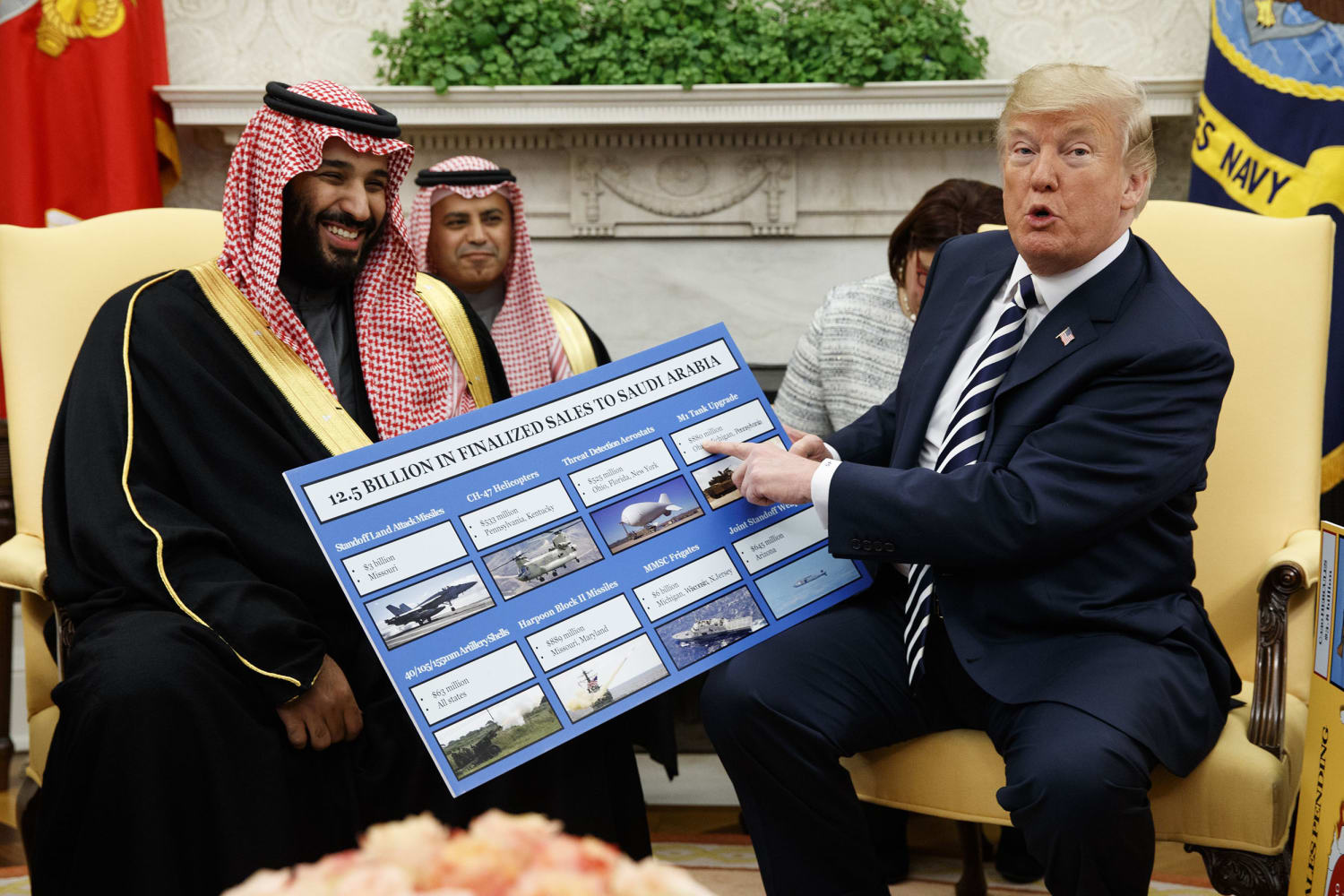
MBS consistently sells one image to the West and cultivates another reality in the region. He asks Washington, London, and European capitals to treat him as a pillar against extremism while reconciling with a Qatar that continues to host Hamas figures and maintain pragmatic channels with Iran. He positions Saudi Arabia as a responsible security partner while drawing closer to nuclear armed Pakistan. He speaks of moderation while seeking leverage over allies and potential threats.
Seen this way, the issue is not inconsistency in the ordinary sense. It is the method in which MBS is actively exploiting Saudi Arabia’s supposed partners. He wants Western governments to keep investing in Saudi Arabia claiming his rule is a stabilizing force, because that fiction delivers weapons, diplomatic cover, capital, and prestige. At the same time, he wants enough independent room in the region to cut deals with actors he previously denounced, provided those deals expand Saudi influence.
The thaw with Qatar therefore matters far more than Gulf diplomacy. It reveals the governing instinct behind MBS’s foreign policy. Hamas remains a designated terrorist organization by many Western countries. Iran remains Hamas’s principal military backer. Qatar remains one of the key states through which Hamas has accessed political shelter and funding. Pakistan remains Saudi Arabia’s most consequential non-Western security partner and the source of the kingdom’s most consequential nuclear ally. Yet MBS has shown that none of these facts are disqualifying when control is the objective.
MBS is playing his Western partners by marketing Saudi Arabia as a firewall against the very networks he is willing to tolerate, instrumentalize, or strategically cooperate with when it suits him. The end state is not moderation, consistency, or alliance loyalty. It is control. Control over the Gulf. Control over the terms on which the West deals with the gulf. Control over a regional order in which Saudi Arabia can condemn, reconcile, threaten, and hedge all at once.

Leave a Reply