
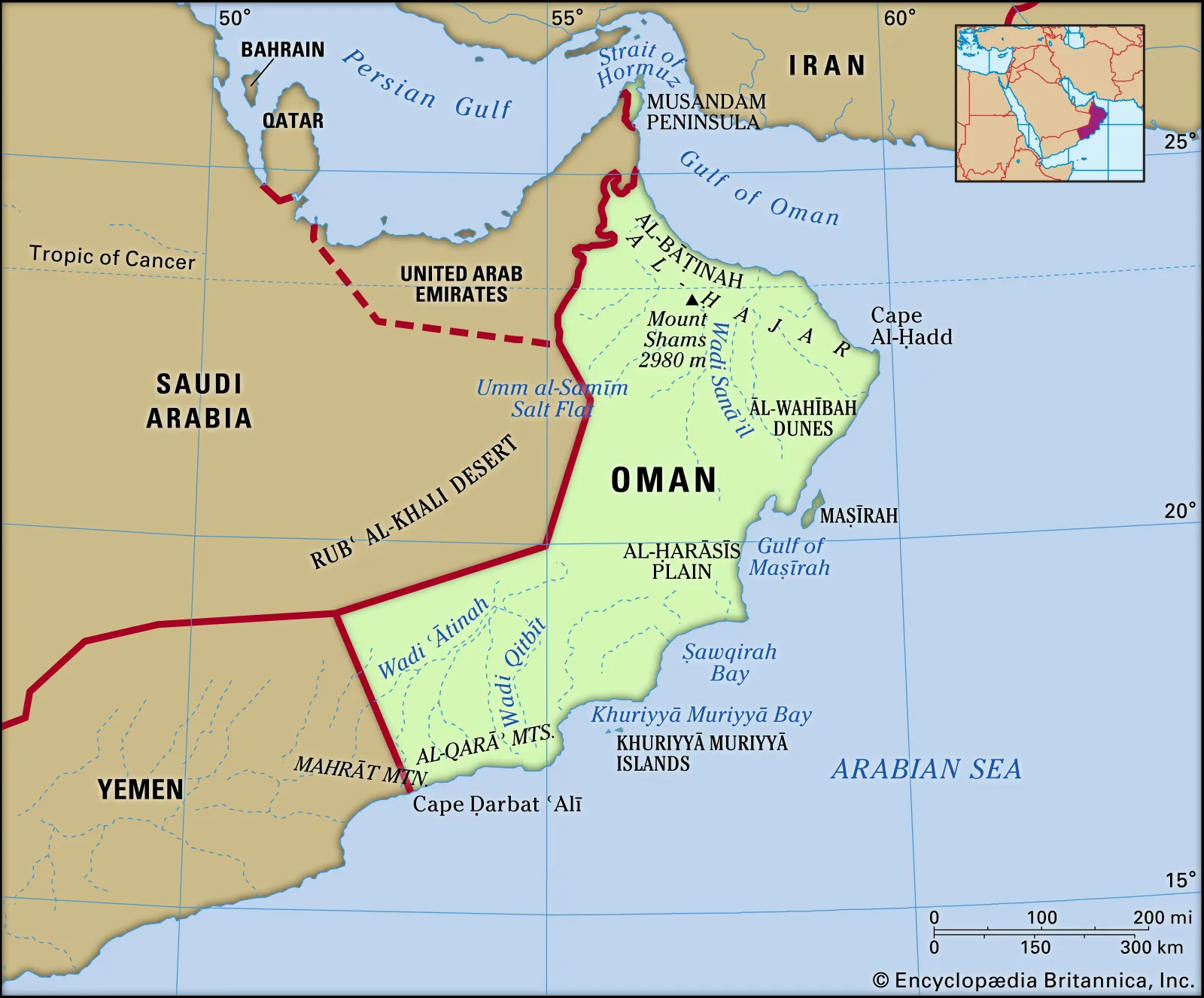
For decades, the Sultanate of Oman cultivated a foreign policy built on sustained neutrality and active mediation. Under Sultan Qaboos bin Said, Muscat maintained balanced relationships with Iran, Iraq, Israel, the Palestinian Authority, and Western powers simultaneously. His successor, Sultan Haitham bin Tariq, preserved that fundamental orientation under the stewardship of Foreign Minister Sayyid Badr bin Hamad Al Busaidi. Through the first weeks of 2026, Oman stood at the centre of the most consequential diplomatic process in the Middle East: the indirect nuclear negotiations between Washington and Tehran. The outbreak of war on 28 February has placed Oman’s model of constructive neutrality under the most severe strain in its modern history.
The Muscat Channel’s Final Hours
The diplomatic track that collapsed into war originated in April 2025, when US Special Envoy Steve Witkoff and Iranian Foreign Minister Abbas Araghchi began talks in Muscat. Al Busaidi relayed messages between delegations seated in separate rooms. Subsequent rounds in Rome and Muscat moved into technical discussions about a potential framework. The core dispute centred on enrichment: Washington demanded Iran cease all activities, while Tehran rejected this as an infringement on sovereign rights, having enriched uranium to 60 per cent purity since abandoning the limits of the 2015 JCPOA.
By February 2026, talks had resumed amid escalating tensions. Al Busaidi publicly stated Iran was willing to make concessions. On 27 February, he issued a final diplomatic appeal that went unheeded. As the Arms Control Association documented, technical discussions had produced progress, but the gap between American demands for zero enrichment and Iranian insistence on retaining its programme proved unbridgeable. The decision to launch strikes during active negotiations raised questions about the role of mediation when one party views diplomatic engagement as parallel to, rather than a substitute for, military action.
Neutrality Under Fire
Oman’s geographic position, sharing the Strait of Hormuz with Iran, gives it direct exposure to regional escalation. That exposure has become physical. Drones struck facilities in Duqm and Salalah, damaging at least one fuel storage tank. Sohar, Oman’s major industrial port, fell within the London insurance market’s designated high-risk area, raising charter costs. A commercial vessel was struck near Port Muscat. Iran denied targeting Oman directly, suggesting false-flag operations, but the damage was real.
The Congressional Research Service’s profile of Oman notes that the Sultanate has historically sought to ensure bilateral projects with Iran do not violate US sanctions. That boundary is far harder to maintain during open warfare. Oman declined to join the Saudi-led Yemen coalition in 2015 and hosts the Houthi movement’s spokesman, making it the primary venue for engagement with Yemen’s de facto northern authority. The war has complicated that role as Iranian-backed groups mobilise across the region.
Economic Vulnerability
Oman’s Vision 2040 depends on foreign investment, tourism, logistics, and industrial development, all requiring stable maritime routes. The Strait’s closure has disrupted Oman’s energy exports, though its Arabian Sea ports offer partial alternatives unavailable to Gulf neighbours. India and Pakistan have deployed destroyers to escort tankers in the Gulf of Oman, but coverage remains limited. The RAND Corporation’s analysis of Omani foreign policy describes Muscat’s approach as pragmatic: neither overestimating its capabilities nor ruling out former adversaries as partners. That pragmatism is being tested by pressures the Sultanate’s modest fiscal reserves are poorly equipped to absorb.
The Mediation Imperative
Despite the February collapse, Oman remains the most credible channel for de-escalation. Its track record of facilitating the secret backchannel that preceded the 2015 JCPOA, arranging prisoner exchanges, and hosting Houthi representatives gives it credibility no other regional state possesses. Pakistan has offered to host talks, but Muscat retains the deepest institutional memory of the nuclear file. As the Institute for MENA Stability has explored, the war’s economic consequences are radiating well beyond the Gulf, strengthening the case for a return to Omani-facilitated dialogue.
Al Busaidi has been increasingly outspoken, publicly stating that Oman views Israel, rather than Iran, as the primary source of regional insecurity. Such statements reflect both domestic sentiment and the diplomatic calculus of a country that needs Iranian goodwill to sustain its mediating role. The war has made that balancing act considerably more delicate. Oman must demonstrate solidarity with its Gulf neighbours, who are enduring daily missile and drone attacks, while preserving the relationship with Tehran that makes Omani mediation possible in the first place.
Outlook
For a country of fewer than five million people with limited military capacity, Oman’s influence rests on trust and a track record of keeping channels open when others allow them to close. If Muscat can facilitate a ceasefire, its reputation as the region’s indispensable intermediary will be reinforced for a generation. If the conflict deepens, Oman’s proximity to the theatre and its economic vulnerability place it in an acutely precarious position. The Sultanate’s strategic choice remains unchanged from the Qaboos era: to be the country that talks to everyone, even when no one else is talking. Whether that approach can survive a full-scale regional war is the question that will define Oman’s next decade.

Leave a Reply