
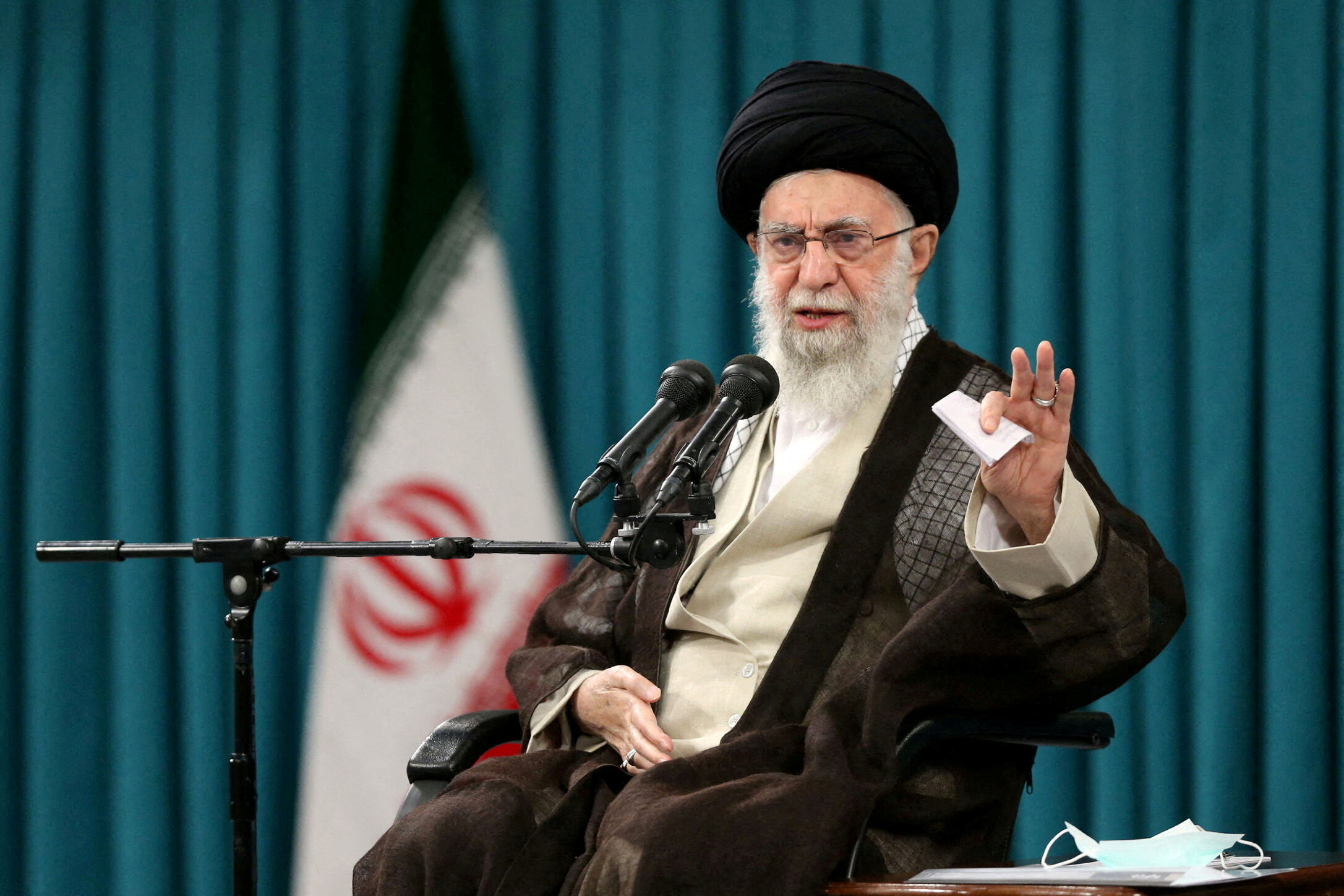
The US-Israeli strikes that began on 28 February 2026 killed Supreme Leader Ali Khamenei, several family members, and a significant number of senior military and intelligence officials. Within days, the Islamic Revolutionary Guard Corps pushed through the appointment of Khamenei’s son, Mojtaba, as the third supreme leader in the Republic’s history. The formal succession process held. But formal succession and functional continuity are different things. The system that translated Iran’s oil wealth into political control depended on networks of personal trust, institutional memory, and factional bargaining built over decades. Many of the individuals who maintained those networks are now dead.
The question facing Iran is whether the surviving apparatus can reconstitute itself fast enough to manage the country’s most important economic asset: its hydrocarbon sector. Oil and gas revenues have funded the IRGC’s commercial empire, sustained the patronage networks binding provincial elites to the centre, and financed external operations. Without the figures who managed the intersection of oil policy and political power, that system is under strain in ways that may prove more consequential than the military damage itself.
Succession Under Fire
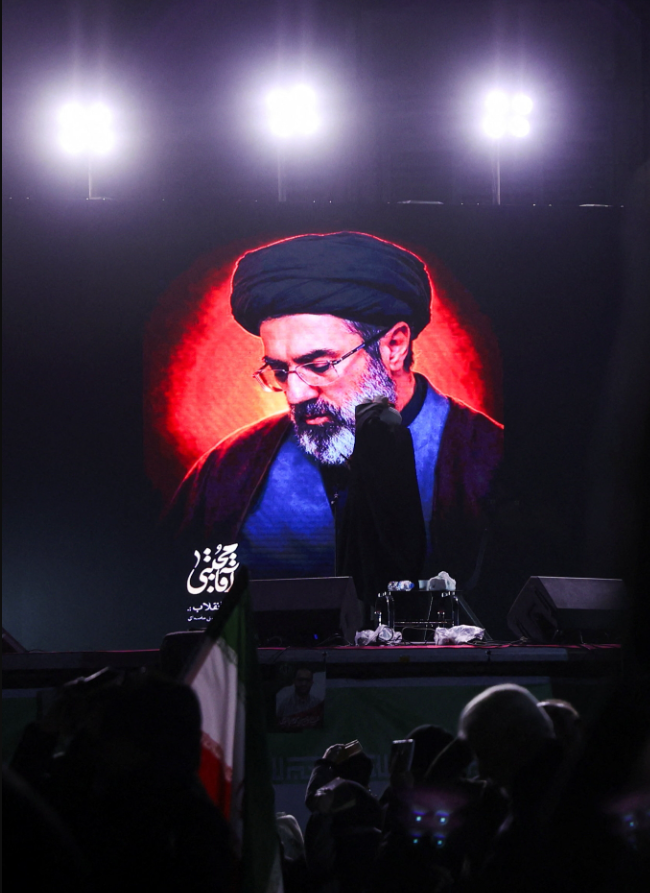
The speed of Mojtaba Khamenei’s appointment reflected less a smooth constitutional process than an IRGC-directed fait accompli. Guard commanders pressured Assembly of Experts members beginning hours after the elder Khamenei’s death. The Assembly, convening partly online due to airstrikes on its Qom offices, ratified the selection within days. Mojtaba has yet to appear on camera. His first public statement was read by a state television anchor, fuelling speculation about the degree to which the IRGC is governing through him rather than beneath him.
Brookings analysts have noted that despite these losses, the regime has held together with no major defections. But holding together and governing effectively are distinct outcomes. The killing of Defence Minister Nasirzadeh, IRGC Commander Pakpour, Defence Council secretary Shamkhani, and multiple intelligence officials has removed institutional knowledge that cannot be replaced by promotion alone. The June 2025 war had already killed much of Iran’s senior military leadership. The February 2026 strikes killed many of the replacements.
The Oil-Security Nexus Under Strain
Iran’s oil sector has always operated at the intersection of commercial management and security control. The IRGC oversees significant portions of the energy supply chain, and its commercial affiliates benefit directly from oil revenues. The sanctions-evasion infrastructure that kept Iranian crude flowing to Chinese buyers depended on a shadow fleet and clandestine logistics network coordinated by figures with deep institutional knowledge. Many of those figures are now casualties of two wars in nine months.
Even before February, Iran’s economy was in severe distress. The World Bank projected contraction in both 2025 and 2026, with inflation approaching 60 per cent. Snapback sanctions reimposed in September 2025 had tightened the fiscal environment further. The capture of Venezuelan President Maduro in January 2026 disrupted a key sanctions-evasion partnership. The war then added physical destruction: Israeli airstrikes hit oil storage facilities on 8 March, and Kharg Island, Iran’s main crude export terminal, was struck. The cumulative effect is an oil state whose export infrastructure, management cadre, and evasion networks have all been degraded simultaneously.
Revenue Disruption and the Risk of Unrest
Iran’s closure of the Strait of Hormuz has imposed enormous costs on the Gulf and global energy markets. But it has also severed Iran’s own primary revenue channel. Mojtaba Khamenei’s first statement declared the strait should remain closed, yet the International Energy Agency estimates global supply could fall by 8 million barrels per day in March as Middle Eastern production is curtailed. Iran cannot export through a waterway it has closed.
The domestic consequences are severe. The nationwide protests that erupted in December 2025, the largest since the 1979 revolution, were driven by economic desperation. The government’s response, killing thousands of demonstrators in January 2026, suppressed the visible movement but addressed none of its causes. A wartime economy that cannot pay its security forces, maintain subsidies, or fund provincial patronage will face a legitimacy crisis that rally-around-the-flag rhetoric cannot resolve. The IRGC’s commercial empire, spanning construction, telecommunications, and energy, depends on financial channels and logistics degraded by sanctions, strikes, and the loss of key personnel.
The Fragmentation Scenario
The International Crisis Group has warned that the war’s most dangerous phase may come after the fighting, when the question shifts from military survival to political reconstruction. If the regime holds, it will do so under a supreme leader with no independent political base, governing through an IRGC that has lost much of its senior command, presiding over an economy that was already contracting before the war began.
The primary threat to Iran’s stability in the medium term may be internal: a slow fragmentation of the elite networks that translated oil wealth into political cohesion. Provincial governors, IRGC regional commanders, and bazaar merchants operated within a system held together by personal relationships and tacit bargains. As those relationships are severed by wartime losses, and as the revenue that funded them diminishes, centrifugal pressures on the Iranian state will grow. By 2028, the question may not be whether the regime survives, but whether it can still govern as a unitary state.
Leave a Reply