
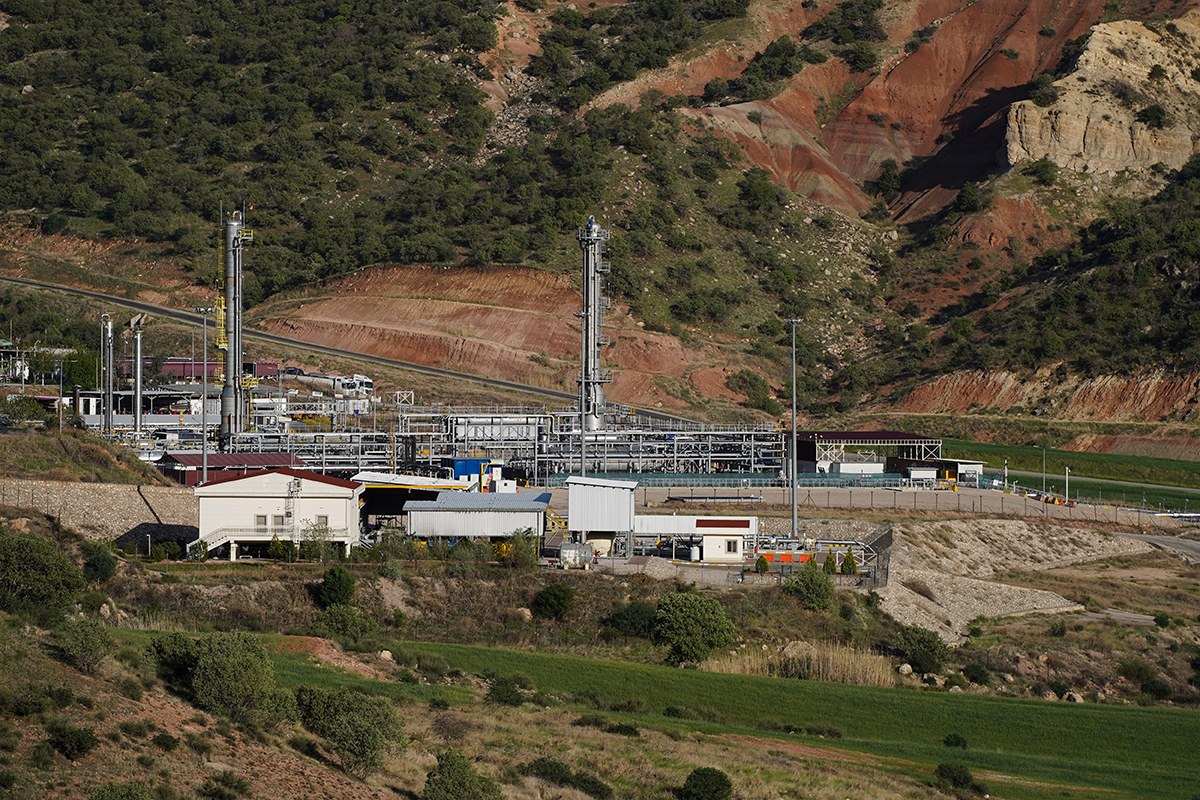
With the Strait of Hormuz closed and oil production from Iraq’s south in free fall, Baghdad’s failure to maximize the Iraq-Turkey Pipeline (ITP) is no longer a policy dispute. It is a national emergency.
Tanker traffic through the Strait of Hormuz has all but stopped. Since the United States and Israel struck Iran on February 28, and Tehran retaliated by attacking vessels in the waterway, the channel that normally carries roughly 20% of the world’s oil supply has become a no-go zone. Insurance premiums have tripled. Oil prices have topped $100 a barrel for the first time in four years. And Iraq, the second-largest producer in the Organization of Petroleum Exporting Countries (OPEC), is learning in real time what it means to be a single-exit oil state. Southern production from the oil fields of Rumaila, West Qurna, and Majnoon has fallen sharply, declining by roughly 70%, from around 4.3 million barrels per day (bpd) to just 1.3 million bpd, because storage is full and there are no tankers to load. Indeed, following attacks on two oil tankers in Iraqi waters on March 12, believed to be carried out by Iran, Baghdad halted oil terminal operations altogether.
A lifeline shut by choice
It did not have to be this way. The ITP once carried between 400,000 and 450,000 bpd of crude from northern Iraq through Turkish territory to the Mediterranean port of Ceyhan, entirely bypassing the Persian Gulf. It was shut down in March 2023 after the International Chamber of Commerce ruled in Baghdad’s favor, ordering Turkey to pay roughly $1.5 billion in damages for facilitating “unauthorized Kurdish oil exports” between 2014 and 2018. Ankara halted flows in response. Northern production then collapsed, falling by approximately 72%. Baghdad and Erbil did reach a US-brokered interim agreement in September 2025 that restored a modest 180,000 to 190,000 bpd, well below the pipeline’s potential. Then the war came. Earlier this month, Baghdad suspended ITP operations on security grounds. The pipeline that should have been Iraq’s lifeline when Hormuz went dark is now sitting idle.
The economic toll is staggering. The Association of the Petroleum Industry of Kurdistan has estimated losses from the pipeline’s initial closure at more than $35 billion. Oil export revenue accounts for over 90% of Iraq’s government income. With southern exports choked off by the Hormuz crisis and northern exports voluntarily suspended, Baghdad faces the real prospect of being unable to fund basic government operations within weeks. Iraqi officials are already discussing emergency borrowing from the Central Bank, and the caretaker government may lack the legal authority to act without parliamentary approval.
The contrast with Iraq’s neighbors is damning. Saudi Arabia maintains the East-West pipeline to the Red Sea and has used it to reroute significant volumes, up to 7 million bpd, away from Hormuz. The UAE built the Habshan-Fujairah pipeline, with a capacity of 1.5 million bpd, that bypasses the strait entirely. Iraq, despite possessing the geography and infrastructure for a northern corridor to the Mediterranean, has voluntarily surrendered that optionality. Baghdad has attempted to bypass the Kurdistan Regional Government (KRG) by reviving the old segment of the ITP that routes through Mosul, but these efforts have gone nowhere. Even if the Iraqi Ministry of Oil were to begin rehabilitation work tomorrow, the repairs would take months, possibly years, to complete. That timeline alone makes the endeavor a non-starter in the middle of a national emergency.
The calendar makes the situation even more urgent. In July 2025, Turkey formally terminated the ITP agreements by presidential decree, effective July 27, 2026. It cited Iraq’s chronic failure to meet throughput commitments, and signaled it wants a broader energy framework covering oil, gas, petrochemicals, and electricity. Turkey has also been feeding crude from its own Gabar oil fields into the pipeline without Iraq’s knowledge, and it has shown no sign of paying the arbitration award. Every month the ITP remains shut is a month in which Ankara can demand higher transit fees and more favorable terms. Baghdad is negotiating from a position of weakness, and the weakness is self-imposed.
Tehran’s dividend
Iran watches this paralysis with something close to satisfaction. Tehran has long preferred a weakened, dependent Iraq, and the ITP’s dysfunction serves that interest neatly. The current war has made the dynamic brutally visible. Since February 28, the Kurdistan Region has been hit by at least 250 drone and missile attacks from both Iran directly and pro-Iranian militia groups operating inside Iraq. The Chamanke oil fields in Duhok have been targeted. The Khor Mor gas field was taken offline as a precaution as it has been targeted in the past. Baghdad’s response has been a study in deflection. When the issue of militia violence comes up, Iraqi officials retreat into whataboutism rather than confronting the reality that armed groups aligned with Tehran are actively destroying the country’s own revenue base.
A deal Baghdad keeps avoiding
A functioning northern pipeline would diversify Iraq’s income, strengthen its fiscal independence, and give Baghdad genuine leverage in regional diplomacy. An Iraq that can route crude to the Mediterranean is an Iraq that can say no to Iranian pressure. The pipeline’s paralysis keeps Iraq tethered to the very geography Tehran dominates. That forces virtually all of its crude through Iraq’s southern terminals, in Basra and Khor al-Amaya, which sit in the Persian Gulf and feed into tanker traffic that must transit the Strait of Hormuz.
The solution is not mysterious. Baghdad and Erbil need to finalize a mutually accepted, permanent agreement on cost recovery and payments for the international oil companies operating in the Kurdistan Region. The September 2025 interim deal proved the concept: oil flowed, money moved, both governments benefited. That framework needs to be made durable and embedded in the next national budget law. Baghdad must accept a practical framework that gets barrels to Ceyhan. It does not require endorsing the KRG’s past legal positions. It requires acknowledging that ideology is a poor substitute for revenue.
Ongoing political friction between Erbil and Baghdad has increased Ankara’s leverage regarding the future terms of the ITP. Baghdad has requested that the KRG authorize exports of 100,000 bpd through Kurdistan’s pipeline system. However, Erbil has conditioned its approval on a broader set of economic and security demands, including the easing of customs restrictions, improved dollar liquidity for Kurdish banks, access to international transfers at the official exchange rate to support the local economy, and preventing Shi’a militia groups from targeting Kurdistan oil fields. Baghdad has rejected this linkage, maintaining that the resumption of Kirkuk oil exports should not depend on resolving other outstanding disputes with the KRG. This impasse has implications that extend beyond Iraq. With so much of the global oil supply currently disrupted, each additional barrel exported through the northern route holds increased strategic and commercial value, particularly for European markets seeking more reliable sources of supply. Thus, the United States, as the principal mediator between Erbil, Baghdad, and the international oil companies operating in the Kurdistan Region, has a vested interest in adopting a more active diplomatic role to bridge differences and facilitate an acceptable compromise. Amid heightened market strain, a timely agreement on resumed exports would have both economic and geopolitical significance.
Iraq stands at a crossroads that its political class seems unwilling to recognize. The Hormuz corridor is closed. Southern production has collapsed. The northern pipeline sits idle. The ITP agreement lapses in four months. Iranian missiles and militia drones are striking Kurdish energy assets with impunity. If Baghdad continues to treat the KRG dispute as a sovereignty exercise rather than a survival imperative, it will find itself increasingly irrelevant: a petro-state that cannot move its own petroleum. That is not sovereignty. That is paralysis, and it is a gift that only Iraq’s rivals can afford to keep receiving.



اترك تعليقاً