
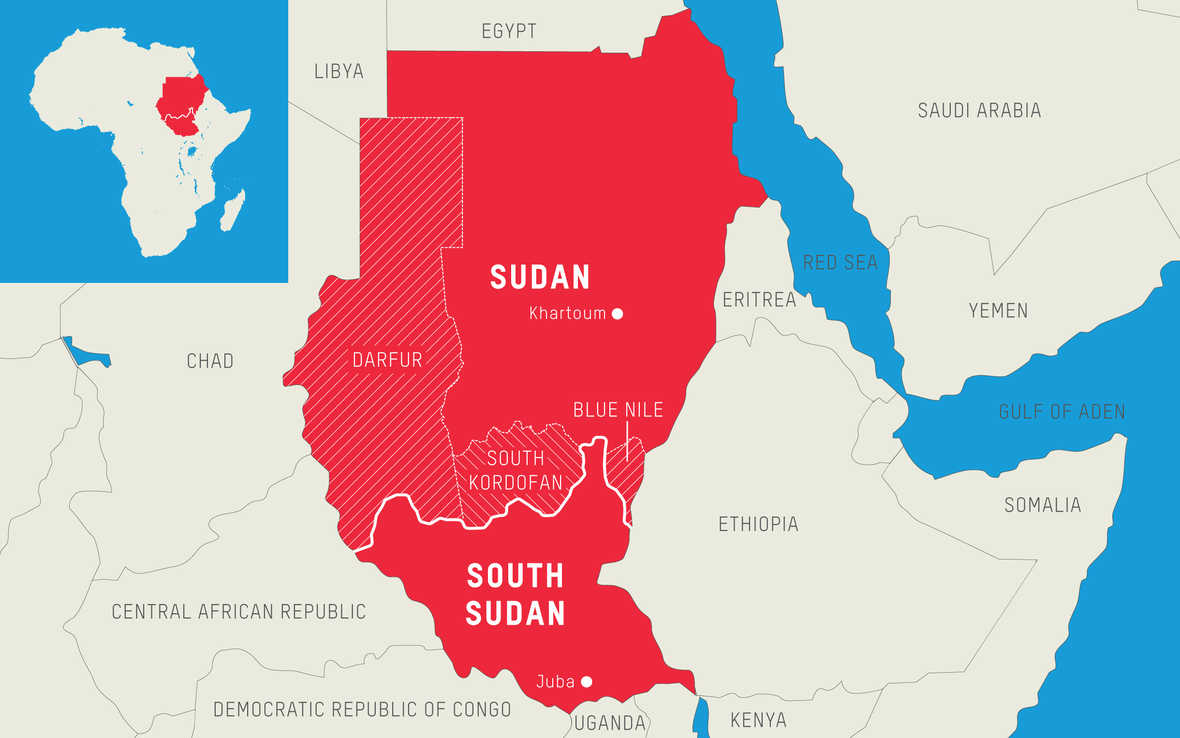
Sudan now sits at the center of one of the most severe food security crises in the Middle East and North Africa. Once described as the breadbasket of the Arab world, the country faces a perfect storm of civil war, climate stress, and economic collapse. An estimated 25 million Sudanese, more than half the population, are experiencing acute food insecurity according to the World Food Programme’s Sudan emergency assessment.
The consequences extend well beyond Sudan. As agricultural production collapses and supply routes get severed, the crisis is placing pressure on food markets across the Horn of Africa and the wider MENA region. Sudan’s experience illustrates how conflict and climate vulnerability can quickly destabilize regional food systems.
War and the Breakdown of Agricultural Production
Since the outbreak of civil war in April 2023 between the Sudanese Armed Forces and the Rapid Support Forces, much of Sudan’s agricultural sector has come to a complete stop. Irrigation systems along the Nile have been damaged, farmland abandoned, and transport corridors disrupted. Farmers in key grain producing regions have struggled to plant and harvest crops while food storage and distribution networks have deteriorated.
Humanitarian agencies warn that without large scale intervention, parts of Sudan could face famine conditions within the next several years. The collapse of domestic production has already produced severe shortages and rising food prices.
The disruption is also spreading across borders. Egypt relies heavily on imported wheat and regional trade routes that historically passed through Sudan. South Sudan depends on Sudanese grain markets and has experienced sharp price increases as those supply routes break down. Population displacement further intensifies these pressures. Millions have fled their homes, contributing to one of the world’s fastest growing displacement emergencies documented by the United Nations High Commissioner for Refugees.
Climate Stress Intensifies the Crisis
Sudan’s agricultural vulnerability did not begin with the war. Over the past two decades the country has experienced recurring drought, expanding desertification, and declining soil productivity. Rainfall has become more erratic and temperatures continue to rise, reducing crop yields and shortening growing seasons.
Water management challenges add another layer of stress. Competition over Nile resources, combined with changing rainfall patterns, has made irrigation less reliable in several agricultural regions. These structural pressures have steadily weakened rural livelihoods.
Long term environmental risks facing Sudan have been documented in assessments by the Food and Agriculture Organization, which highlight how drought and land degradation have steadily reduced agricultural resilience across the Sahel and Horn of Africa.
Under stable conditions these challenges would require investment in drought resistant seeds, irrigation modernization, and land restoration. In a conflict environment such investments are nearly impossible. Farms have become battlegrounds and public institutions responsible for agricultural policy have lost much of their capacity.
Uneven Capacity Across the MENA Region
Sudan’s crisis also highlights the unequal ability of MENA states to respond to food security threats. Wealthier Gulf states have begun investing heavily in agricultural technology and alternative supply strategies in order to reduce vulnerability to global disruptions.
Saudi Arabia has incorporated food security into its national economic strategy, supporting agricultural innovation, strategic food reserves, and overseas agricultural investment as part of its Vision 2030 program. The United Arab Emirates has taken similar steps through investment in controlled environment agriculture, vertical farming, and international food supply partnerships.
These initiatives allow wealthier countries to buffer against global food shocks despite harsh environmental conditions. Sudan lacks the financial resources, political stability, and institutional capacity necessary to pursue similar strategies. In fragile states, food security is less a technological challenge than a question of governance and stability.
Obstacles to Recovery
Sudan’s recovery will depend first on political stabilization. Agricultural reconstruction requires secure farmland, functioning transport systems, and institutions capable of coordinating investment and land management.
Regional governments have strong incentives to prevent Sudan’s complete collapse. Egypt faces potential refugee flows and trade disruptions if instability deepens. Countries across the Horn of Africa also risk further economic and humanitarian strain.
Yet meaningful investment remains unlikely without a political stability. International capital rarely enters environments where security conditions are uncertain and property rights are unclear. Until stability returns, Sudan will remain heavily dependent on humanitarian assistance to prevent widespread famine.
Regional Implications
Sudan’s crisis highlights a broader lesson for the MENA region. Food security depends not only on technological innovation or financial investment but also on political stability and resilient institutions.
If Sudan’s instability continues, food prices across the region will remain volatile and governments will face increasing pressure to maintain costly food subsidies. If the country eventually stabilizes, agricultural reconstruction could restore part of its historic role as a regional food producer.
For policymakers across the region, Sudan demonstrates that agricultural development cannot succeed without security, governance, and functioning state institutions. When those foundations collapse, even regions with significant agricultural potential can quickly become centers of food insecurity.










اترك تعليقاً