
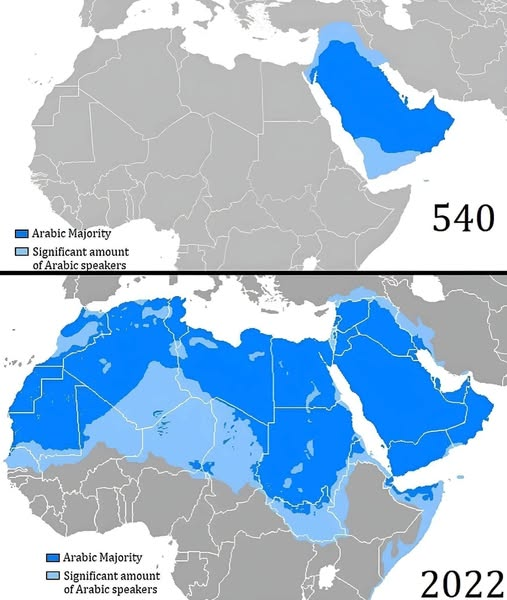
For nearly a decade, Mohammed bin Salman has worked on his facade. In public he is the reformer: Vision 2030, women behind the wheel, cinemas reopening, a Chinese-brokered deal with Iran. Yet in private, his Kingdom does something else entirely. It props up the war in Yemen, meddles in Sudan, quietly rehabilitates the same extremist and problematic Gulf neighbours it once tried to strangle and pushes the religious and economic tentacles of Wahabism and The Public Investment Fund (PIF) deep into the Horn of Africa. The two pictures don’t contradict each other they are just different angles of the same picture.
Although from the outside MBS’s foreign policy looks erratic, there is a clear strategy behind his neo-colonial project. In it, Saudi influence grows not by solving crises but by controlling them. Dependency is the objective of MBS’s colonial Saudi Arabia. Neighbours and supposed partners stay fragmented, broke, and in permanent need of Riyadh to broker the next truce.
Yemen is the clearest example. Take for example Operation Decisive Storm which was sold in 2015 as a quick campaign to restore the recognised government and supposedly push back the Houthis. However, ten years after the start of the war, Yemen is the worst humanitarian catastrophe on earth. The Houthis are more entrenched than they were at the start, and Riyadh has walked away from every serious off-ramp it was offered, Kuwait, Stockholm, the 2022 truce, whenever de-escalation looked like it might produce a Yemen capable of running itself. Saudi Arabia fortified its own border, sidelined the Southern Transitional Council the moment the STC became too effective to control. A self-governing Yemen on the southern frontier would be a problem. A broken Yemen that needs Gulf money to rebuild and Gulf mediators to stop killing itself is, from Riyadh’s perspective extremely useful.
Sudan runs on the same logic, just with different tools. After Bashir fell in 2019, Saudi Arabia pledged billions to the then transitional government, as a debt rather than a gift. Saudi sovereign wealth and Riyadh-linked private money has been buying hundreds of acres of fertile land along the Nile, turning Sudan into an offshore food pantry for Gulf cities. The brief civilian opening of 2019 was undermined by Riyadh and Cairo in concert; when the generals moved in 2021, the official line from Riyadh was “restraint.” When the war broke out in 2023, Saudi Arabia reappeared as a neutral mediator in Jeddah. Funny how the word neutral is used there as Saudi Arabia had financial relationships that ran through multiple sides of the conflict. Long before any of that, Wahhabi-funded mosques and schools had been softening the ground for years, elbowing out Sudan’s deep-rooted Sufi traditions along with millions given in capital or the shipments of weapons. All of it branded as Islamic solidarity.
The Gulf itself got the same treatment in miniature. In 2017 Saudi Arabia led a four-year blockade of Qatar and spent it denouncing Doha’s ties to the Muslim Brotherhood, Hamas and Iran as existential threats. The famous 13 demands such as shut down Al Jazeera, freeze ties with Tehran, close the Turkish base. In 2018 MBS folded the Brotherhood into a “triangle of evil” with Iran and the extremists. Then at Al-Ula in January 2021 the whole thing just ended. Qatar had conceded nothing. Hamas figures kept their villas in Doha. Qatar’s line to Tehran stayed open. Today Riyadh is signing high-speed rail deals, trade agreements and tourism MOUs with Doha, and fighting alongside the Yemeni Islah party—a Brotherhood affiliate—against the Houthis. If 2017 had been about principle, 2021 would be inexplicable. However, when it is seen for what it is, that being i.e. leverage and control, the 2021 Al-Ula declaration makes sense.
Across the Horn of Africa, the framework that Saudi Arabia has created and is creating stops being as discreet. For example, Vision 2030 is very clearly about the KSA anxieties about water, food-import dependency, or the amount of capital at risk in Red Sea megaprojects. Saudi Arabia has turned all of Africa’s coastline and interior into a Saudi strategic frontier. Billions have moved into ports, farmland, logistics, mines and military cooperation deals from Sudan and Eritrea to Somalia and Ethiopia. The 2018 Ethiopia-Eritrea peace deal got over the line in part because Saudi money made it worth everyone’s while, and because it opened the African side of the Red Sea to Riyadh.
The binding agent under all of this is Wahhabism—not as doctrine so much as the groundwork for allowing Saudi Arabia to infiltrate all these different countries. Between 1982 and 2005, Saudi Arabia poured somewhere between $75 and $100 billion USD into more than 1,500 mosques, 200 Islamic colleges, 210 centres and 2,000 schools from the Balkans to Bangladesh. The effect was not religious replacement. Shrines were desecrated in Somalia and Imams swapped out. Sudan’s Sufi networks were hollowed from within. In northern Yemen, the Dar al-Hadith madrassa at Dammaj spent decades Wahhabising the landscape, preparing the terrain for the war Riyadh would later show up to manage. A 2013 European Parliament report named Wahhabism the principal global source of terrorist ideology. That infrastructure didn’t get dismantled when MBS announced his pivot to “moderate Islam.”
And this is the part that earns the word colonial. European empires extracted land and labour through force and administration. MBS’s project extracts the way of thinking of ordinary people, and how dictates how their governments. The mosques manufacture dependency and so do the sovereign wealth deals, the port concessions, the arms contracts, the ceasefire diplomacy, the religious scholarships. Old empires wanted their peripheries pacified. MBS wants his peripheries in permanent managed crisis, because a region that always needs a mediator always needs him.
As long as Western governments keep reviewing the performance instead of the policy, the bill is going to be paid by Yemeni, Sudanese, Somali and broader Muslim citizens and public.

Leave a Reply