
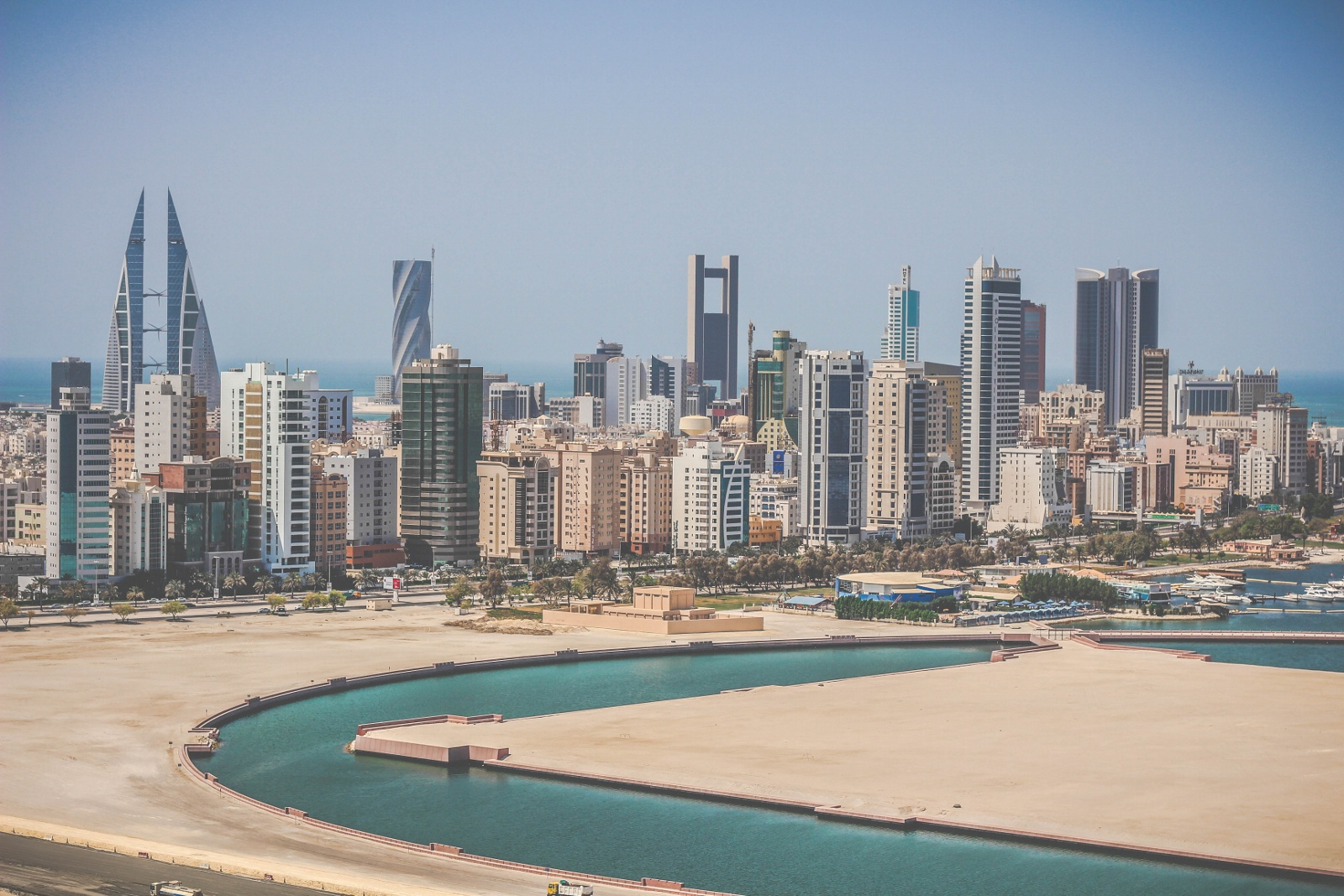
Bahrain entered 2026 carrying a debt burden the International Monetary Fund placed at approximately 133 per cent of GDP, with a fiscal deficit running at around 11 per cent of national output. The kingdom had long marketed itself as the Gulf’s most diversified economy, and the numbers partly supported the claim: the non-oil sector accounted for roughly 85 per cent of real GDP, driven by financial services, aluminium production, manufacturing, and tourism. Yet government revenues remained overwhelmingly dependent on hydrocarbons, which still generated approximately 75 per cent of budget receipts. That structural mismatch between the economy’s composition and its fiscal base has been Bahrain’s defining vulnerability for years. The outbreak of the Iran war on 28 February has turned that vulnerability into an active crisis.
Pre-War Momentum
Before the conflict, Bahrain’s economic trajectory was creditable. Real GDP expanded by 2.7 per cent year on year in the first quarter of 2025, with non-oil activity growing at 2.2 per cent and the oil sector contributing a 5.3 per cent increase. The IMF’s 2025 Article IV assessment projected full-year growth of 3.5 per cent. Foreign direct investment stock rose by 3.5 per cent to reach 17.1 billion Bahraini dinars. Inflation remained negligible at 0.1 per cent. The completion of the Bapco Modernisation Project, inaugurated by King Hamad bin Isa Al Khalifa in late 2024, represented the kingdom’s largest strategic energy investment, intended to boost refining capacity and position Bapco Energies at the centre of industrial strategy for the coming decade.
Fiscal reform efforts since 2018 had produced genuine, if insufficient, results. Following a $10 billion support package from Saudi Arabia, the UAE, and Kuwait, Bahrain introduced VAT and fee reforms that lifted non-oil revenues by a reported 147 per cent. A voluntary retirement scheme reduced the public-sector workforce by 18 per cent. The IMF’s 2025 consultation recommended further measures including a general corporate income tax, reductions in broad energy subsidies, and targeted social transfers. Bahrain’s newly launched Economic Vision 2050 provided the strategic framework for continued diversification.
The War’s Impact
Iran’s retaliatory campaign following Operation Epic Fury has struck at the foundations of Bahrain’s economy. The state oil company BAPCO declared force majeure after missile and drone strikes damaged its refinery complex. Aluminium Bahrain, one of the country’s most significant non-oil employers and exporters, confirmed that its facilities were hit, with injuries reported. A drone struck a desalination plant, an attack carrying severe implications for a country with no natural freshwater sources. Over the course of March, Bahrain’s military reported intercepting 174 missiles and 391 drones.
The closure of the Strait of Hormuz has compounded the damage. Unlike Saudi Arabia and the UAE, Bahrain possesses no alternative pipeline infrastructure to bypass the Strait. Energy exports have effectively ceased. Tourism, which had been a growing contributor to GDP, has collapsed as regional airspace closures and flight cancellations severed the kingdom’s connections to international markets. The 2026 Bahrain Grand Prix was cancelled. The World Bank’s MENA Economic Monitor had projected GCC-wide growth of 3.2 per cent for 2025; those projections are now obsolete.
Debt, Dependency, and the Gulf Compact
Bahrain’s breakeven oil price had climbed to approximately $125 per barrel, a figure rendered irrelevant when the country cannot export oil at all. In November 2024, S&P Global downgraded its sovereign credit rating, citing persistently high debt and large deficits. The kingdom’s reliance on financial backing from wealthier Gulf neighbours is well established, but those neighbours now contend with their own damaged infrastructure and lost export revenues. Whether they retain the willingness or capacity to extend further support remains an open question. The Allianz Trade country risk assessment had warned before the conflict that Bahrain’s debt trajectory appeared unsustainable without consolidation. The war has accelerated that timeline dramatically.
The Financial Sector Under Pressure
Bahrain’s longstanding role as the Gulf’s banking hub faces a stress test without precedent. Airspace closures, damaged communications infrastructure, and heightened country risk have disrupted cross-border financial flows. The Amazon Web Services data centre in Bahrain, a centrepiece of the kingdom’s digital economy strategy, was damaged by debris from intercepted missiles, causing electricity disruptions. For a financial centre whose competitive advantage rests on connectivity, reliability, and regulatory predictability, these disruptions carry consequences that extend well beyond the duration of the conflict itself. As the Institute for MENA Stability has documented, Iran’s campaign has exposed the fragility beneath the Gulf’s image of rapid economic progress.
Outlook
Bahrain’s economic future now depends on variables that lie entirely outside Manama’s control: the duration of the war, the reopening of the Strait of Hormuz, and the willingness of Gulf allies to provide renewed financial backing. Even in a best-case scenario involving a swift ceasefire, the damage to physical infrastructure, investor confidence, and regional perception will take years to repair. The war has demonstrated that output diversification alone cannot insulate a small state from great-power conflict conducted on its doorstep. Bahrain’s fiscal reform agenda will need to be paired with a fundamental reassessment of the kingdom’s security architecture and its approach to economic resilience. The next phase of development will be shaped less by Vision 2050 blueprints and more by the hard lessons of 2026.



Leave a Reply