
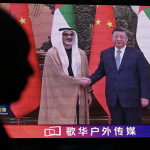
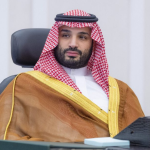
In March 2023, MBS flew officials to Beijing to shake hands with Iranian counterparts under a Chinese-supervised deal. The photos were everywhere. KSA’s state media called it a new era. Western commentators who had spent years calling MBS reckless suddenly called him savvy, a dealmaker pivoting Saudi Arabia beyond its dependence on Washington. The crown prince claimed to have outgrown the old playbook.
Three years later, American munitions are falling on Iranian soil and the man who bet his credibility on befriending Tehran is attempting to maintain the façade of normalcy.
MBS made a specific, personal choice to pursue normalization with a regime whose Revolutionary Guard was, at that very moment, arming the Houthis. The same Houthis who, at Iran’s behest, attacked Saudi oil facilities, briefly disrupting half of the country’s oil production back in 2016 and between 2019 and 2023, Houthi drones and missiles struck Saudi energy infrastructure repeatedly, once knocking out roughly half of Aramco’s processing capacity for weeks. MBS’s response to all of this was to sign a peace deal with the very same people responsible, Iran, for supplying the weapons and directing the attacks. He publicly distanced Saudi Arabia from the Western deterrent posture that had, for decades, made Iran reconsider its aggression because the toll would be too expensive. MBS, however, decided to bet that engagement would pacify Tehran. That bet was wrong, and now the whole Gulf is paying for it with their energy sites being targeted, foreign investment pulling back, and a regional tourism economy that is decimated in ways no one could have dreamed of twelve months ago.
Since the war started MBS has been acting like an ostrich with his head buried in the sand, avoiding the very real consequences of his decision to normalize with Iran. His public persona has only made one address in the last six weeks. One. The same Saudi state media that can turn around a press release about Dave Chappelle or Cristiano Ronaldo within the hour has produced nothing of substance about the largest military confrontation the Middle East has seen in decades. Just as a reminder of the size of this fumble: the crown prince compared Iran’s Supreme Leader to Hitler back in 2018, went on to befriend the same regime four years later, and is now pretending the wreckage of that decision belongs to someone else. MBS wanted the credit for the détente. It’s funny how he now doesn’t want to assume responsibility for the monster he enabled.
Until now, Riyadh has adopted a wait-and-see posture. MBS is keen to preserve his ceasefire with the Houthis, a product of the very normalization that blew up in his face. He seems scared of them, and for good reason. Saudi Arabia’s outright participation in the war would invite Houthi attacks that could cripple Saudi oil exports transiting the Red Sea. If Iran escalates and targets vital Saudi infrastructure directly, MBS may find himself helpless and forced to lean on even harder on foreign support from the very Western partners he has spent years publicly outgrowing. The man who sold independence is now praying quietly that someone else’s military keeps his oil flowing.
The Iran bet did not happen in isolation. It was part of a larger theory MBS sold to the Saudi public: give up political participation, accept the purges, accept the 356 executions in a single year, accept the forced evictions of the Huwaitat tribe from land they had lived on for centuries to make way for NEOM, and in exchange you get prosperity and a modern country. The Vision 2030 pitch required a stable Gulf. MBS’s Iran gamble destroyed that strategy.
NEOM’s costs have ballooned far beyond anything the original prospectus described, and almost nothing has been built at the promised scale. The PIF’s governor, Yasir al-Rumayyan, publicly acknowledged that MBS overrode the board of directors to force through pandemic-era stock purchases the board had voted against. The Jeddah Central Development Company displaced working-class Saudis and migrant workers from their homes to build luxury tourism infrastructure that now sits in a region at war. Every one of these projects was predicated on a crown prince who knew what he was doing. The Iran fiasco has made that predicate harder to defend.
MBS promised “moderate Islam” and a post-oil future. What he has delivered, so far, is a kingdom that executed more people last year than at any point since monitoring began back in 2013, a megaproject portfolio bleeding money, and a regional security environment that his own diplomatic choices helped wreck. The “moderate” reformer’s grand mufti, Saleh al-Fawzan, has publicly declared Saudi Shia citizens non-Muslims. MBS calls al-Fawzan a father figure. If this is the reform MBS meant, I’m sure many would have preferred to have stayed with the old but known.
No matter how this war ends, MBS knows he has to preserve what is left of his economy and whatever remains of Saudi Arabia’s “strategic independence.” He will continue looking to the United States for some support, because he has no real choice. But he will also have to complement that by deepening alliances with the axis of evil Egypt, Pakistan, and Turkey, and by pursuing an even greater reliance on China. And he will need to seek a new arrangement with Iran to manage the war’s aftermath. Think about that for a second. The man whose grand diplomatic achievement was normalizing with Tehran will, when the dust settles, need to normalize with Tehran again. He is running the same play that just failed, because he does not have another one.
There is an Arabic phrase older than the Saudi state: Ayyām al-Jāhiliyyah. The days of ignorance. It refers to the period before Islam, when leaders acted without wisdom or accountability and the people beneath them absorbed the consequences. MBS would probably find the comparison offensive. But it is an accurate description of his current policies and views.
The crown prince has his entertainers, his footballers, his sovereign wealth fund. What he has stopped having, sometime in the last few months, is common sense. And he does not seem to have noticed that yet, or if he has, he has decided that saying nothing is safer than admitting it. That might be the most revealing thing about MBS in this entire crisis. He built his brand on the claim that he was the one leader in the Gulf willing to say what everyone else was thinking. Now the Gulf is on fire and the one thing he has not done is speak up nor has he taken action.
Leave a Reply