
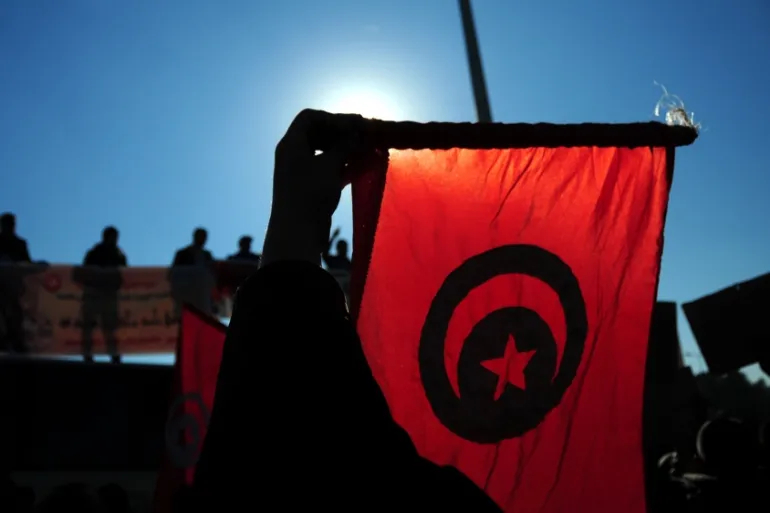
Tunisia entered the closing months of 2025 with an economy that had avoided the worst predictions but failed to generate the momentum needed to address its structural weaknesses. Real GDP expanded by 2.4 per cent in the first nine months of the year, according to the World Bank, supported by stronger agricultural production, a recovery in construction and improving tourism. Growth for the full year was projected at approximately 2.6 per cent, a modest improvement but well below the level required to reduce unemployment or attract sustained private investment.
The underlying picture remained one of deep fragility. Public debt stood at 81.2 per cent of GDP, up sharply from 67.8 per cent in 2019. Gross financing needs had more than doubled over the same period. The fiscal deficit, while narrowing slightly to 6.3 per cent of GDP in 2024, remained significantly above the 2.9 per cent recorded before the pandemic. And perhaps most consequentially, Tunisia had severed its relationship with the International Monetary Fund, closing off the institutional framework that had historically provided both financial support and a signal of policy credibility to international creditors.
The Turn to Domestic Borrowing
الـ 2025 Finance Law revealed the scale of Tunisia’s shift toward domestic financing. Domestic borrowing needs were estimated at approximately $6.8 billion for the year, nearly double the $3.6 billion required in 2024. External borrowing, by contrast, was halved to $1.9 billion. The centrepiece of this strategy was a $2.3 billion credit line from the Central Bank of Tunisia, a measure that generated significant debate among economists and financial analysts.
President Kais Saied’s government framed this approach as a path toward greater economic sovereignty. By reducing dependence on external creditors and international financial institutions, the argument went, Tunisia could chart a more independent course toward recovery. The 2025 Finance Law also introduced changes to personal and corporate income tax, aiming to broaden the revenue base and address chronic fiscal shortfalls.
Critics warned that heavy reliance on domestic borrowing risked crowding out private sector credit and generating inflationary pressure. Economist Ridha Chkandali argued publicly that the government’s 3.2 per cent growth target was unrealistic, suggesting actual expansion would fall closer to 1.3 per cent. The World Bank had projected 2.3 per cent growth earlier in the year, which it later revised modestly upward as agricultural and tourism data improved.
Inflation and Social Pressure
Inflation offered one of the few genuinely positive data points. Consumer price growth declined for seven consecutive months, falling from a peak of 10.4 per cent in February 2023 to 4.9 per cent by October 2025. Easing global commodity prices, reduced domestic demand and the Central Bank’s high policy rate all contributed to this trajectory.
The moderation in inflation provided limited relief for Tunisian households, many of whom continued to face stagnant wages and rising living costs. Public sector salaries had been constrained by a 2022 agreement that capped increases at 3.5 per cent annually through 2025, a figure that lagged behind cumulative inflation over the period. Unemployment, particularly among young graduates, remained stubbornly high and showed few signs of improvement.
الـ World Bank’s November 2025 economic update noted that Tunisia’s social assistance programme, the AMEN cash transfer scheme, had tripled its coverage over the past decade to reach roughly 10 per cent of the population. The report recommended improvements to targeting and regional equity, as well as extending social insurance to informal workers. These measures would require sustained fiscal commitment at a time when the government’s room for manoeuvre was increasingly constrained.
Political Concentration and Institutional Risk
Tunisia’s economic trajectory could not be separated from its political direction. Since President Saied’s consolidation of power in 2021, the country had moved steadily toward a hyper-presidential system with limited checks on executive authority. The 2024 presidential election returned Saied to office with extremely low voter participation, reflecting growing public disengagement.
International observers warned that the combination of concentrated political power, weakening institutions and rising fiscal pressure created conditions in which an economic shock could rapidly escalate into a broader governance crisis. The absence of meaningful political opposition reduced the capacity for course correction if economic conditions deteriorated.
External Relationships and the Road Ahead
Tunisia’s external position showed some improvement in 2025. Tourism revenues rose by 8.3 per cent, remittances from Tunisians abroad grew by 11.2 per cent, and the current account deficit narrowed to 1.7 per cent of GDP. Foreign direct investment increased modestly, though it remained insufficient to cover the country’s combined external obligations.
For Tunisia, the central challenge heading into 2026 remained generating sustainable growth while managing a heavy debt burden and limited external financing. The government’s bet on domestic resources carried real risks, but it also reflected the reality that traditional sources of international support had largely dried up. Whether this approach could avoid a deeper fiscal crisis would depend on the government’s willingness to implement structural reforms that went beyond revenue collection and addressed the deeper constraints on investment, job creation and institutional capacity.


اترك تعليقاً