
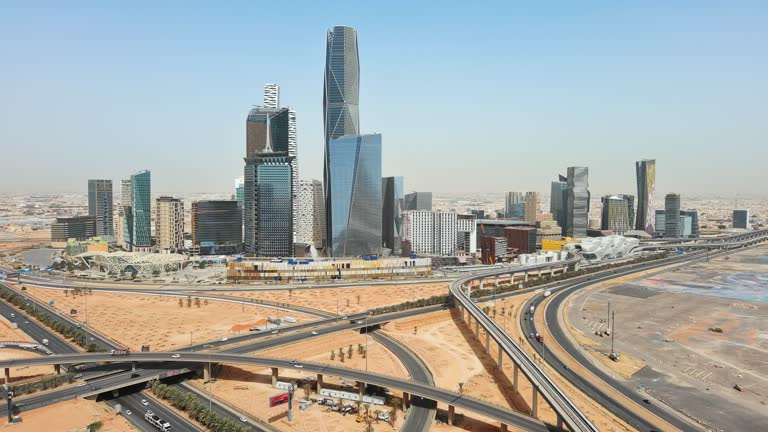
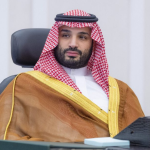
Saudi Arabia has spent the better part of a decade attempting to reshape the fundamental structure of its economy. Under the Vision 2030 programme, launched in 2016 by Crown Prince Mohammed bin Salman, the Kingdom has committed to reducing its dependence on hydrocarbon revenues and building new pillars of growth in tourism, entertainment, technology and advanced manufacturing. As the programme approaches its tenth anniversary, the results present a complex picture: genuine structural gains alongside persistent fiscal vulnerabilities.
Non-Oil Momentum and Fiscal Strain
The non-oil economy has been the clearest success story. According to the International Monetary Fund, non-oil real GDP grew by 4.5 per cent in 2024, driven by expansion in retail, hospitality, construction and logistics. After GDP rebasing, non-oil activity now accounts for roughly 76 per cent of total output, a significant shift from the composition of the economy a decade ago. Tourism arrivals surpassed 116 million in 2024, including 30 million foreign visitors, generating approximately $75.7 billion in revenue and contributing 4.7 per cent of GDP. Women’s labour force participation rose to around 36 per cent, exceeding the original 30 per cent target set under Vision 2030.
These gains, though, have come at a cost. The period from 2022 to 2024 was characterised by elevated oil prices that provided a fiscal cushion for the acceleration of Vision 2030 spending. With Brent crude averaging considerably lower in 2025 than in those peak years, the Kingdom faces a more constrained fiscal environment. The IMF has noted that Saudi authorities raised the estimated 2025 fiscal deficit by approximately 3 per cent of GDP. Budget deficits persist, pressured by oil price volatility and the political sensitivity of adjusting certain categories of public expenditure.
The Energy Paradox
Saudi Arabia occupies an unusual position in the global energy landscape. As the world’s largest oil exporter and the dominant force within OPEC, the Kingdom remains deeply tied to hydrocarbon markets even as it invests heavily in alternatives. The OPEC+ decision in mid-2025 to accelerate supply additions reflected a strategic pivot: rather than defending price levels, major Gulf producers have opted to recapture market share and squeeze higher-cost competitors, particularly in US shale.
This approach carries calculated risks. According to the Middle East Institute, OPEC+ strategy now deviates sharply from the post-COVID recovery period, when deep production cuts were used to support prices. Several major producers experienced economic contractions or lower GDP growth as a consequence of those cuts, prompting a fundamental rethink. The new approach prioritises volume over price, but its success depends heavily on global demand trajectories that remain clouded by trade tensions and slowing growth in key markets.
Mega-Projects Under Scrutiny
The physical infrastructure of Vision 2030 has attracted both admiration and scepticism. NEOM, the $500 billion flagship development on the Red Sea coast, has faced repeated scope adjustments and timeline revisions. The decision in 2024 and 2025 to reprioritise certain large investment projects reflected a pragmatic recalibration: focusing spending on areas with the highest expected returns while mitigating the risk of economic overheating.
الـ مجلس الأطلسي has observed that the most decisive factor in the long-term sustainability of Vision 2030 is human capital. Roughly 70 per cent of Saudi citizens are under thirty-five, and the programme’s capacity to generate meaningful employment for this cohort will ultimately determine its success or failure. Structural inefficiencies still constrain the full economic potential of a large segment of the workforce, and the Kingdom has yet to develop a deep culture of entrepreneurial risk-taking or adequately support small and medium-sized enterprises.
Capital Markets and Foreign Investment
Attracting sustained foreign direct investment has proven more difficult than anticipated. While Riyadh now hosts more than 675 regional headquarters of global firms, and the Public Investment Fund has grown into one of the world’s largest sovereign wealth vehicles, investors continue to seek greater transparency and consistent regulatory enforcement. The development of a stronger domestic capital market remains a priority.
الـ World Bank has projected regional GDP growth of 2.8 per cent for 2025 and 3.3 per cent for 2026, with Gulf Cooperation Council countries expected to outperform. Saudi Arabia’s non-oil revenue base has doubled over the past five years through the introduction of value-added tax, excise duties and new fees. Energy subsidy reform and more efficient public spending will play critical roles in sustaining the fiscal position as oil revenues face structural headwinds.
التوقعات
The remainder of 2025 and early 2026 will test whether Saudi Arabia’s diversification efforts can withstand a less forgiving external environment. The achievements of the past decade are real: a broader revenue base, higher female workforce participation, a growing tourism sector and improving governance indicators. The risks are equally tangible: dependence on public investment as the primary engine of growth, persistent budget deficits, and a labour market that has not yet absorbed the aspirations of a young population. The Kingdom’s ability to manage the transition from stimulus-driven expansion to self-sustaining private sector growth will define the next chapter of its economic story.


اترك تعليقاً